Self-Inflicted Agony

Friday at 4:30 I receive an email from a parent stating she knows we didn’t feel the need to have a conference with them at this time but she has questions about reading and would like to meet with me to discuss. Without any more details, my mind jumps to the cruel personal hell I always go through when a vague parent meeting is requested.  My mind races to what I must be doing wrong.  I worry about how I have slighted this student or let down this parent.

It’s all I think about for the rest of the night.  While I have dinner and watch TV with my husband, I keep finding myself stewing, becoming more and more anxious.  This is the part of teaching that makes me want to walk away the most.  I falsely believed this would get easier over time and with experience, but I find myself increasingly sensitive and more and more paranoid.  I’ve heard it called “Imposter Syndrome” and I feel like that speaks directly to my fear. 

Saturday, on our way to a wonderful day in Chicago with our son and his wife, with the sun shining and a day ahead that I’ve been looking forward to for weeks, I find my heart still heavy with dread.  I can’t let it go.  I keep running through what it might be about…their child was quarantined, did I say something during virtual learning that upset them?  Do they not feel like I am doing any meaningful teaching since we haven’t been following the TE like years past, but instead focused on essential standards and using mentor texts to teach from?  Is the structure of Daily 3 making them feel like I am not teaching at all?

For awhile on Saturday, I am able to forget it and focus on my time with my son but once we get in the car to return home and past talking about the visit, the quiet in the car opens the door for my brain to jump back to the email. I had responded with a positive reassurance that I was always open to conversations and suggested a few times this upcoming week when we could make that happen.  The more time that passes, however, the more I wish I had somehow been able to ask for more details. 

From the moment my eyes open on Sunday, I am still mulling it over.  I have begun to convince myself that I am not actually doing my best teaching; that I should have accomplished far more at this point in the year and that I should have been spending far more time on this or that.  I am able to distract myself for awhile, but even while doing yard work and tasks done around the house, the fears keep coming and coming, louder and louder. 

By Sunday dinner I am so worked up I want someone to help talk me down.  I don’t bring any of this up with my husband, however, as an issue with our well has his stress level already high enough.  I go to bed trying to calm myself but I am now reciting explanations and clarifications in my head in preparation for the meeting, even though I still don’t know the exact nature of the problem or concern.

Before calling it a night, I finish my crossword and check the news on my phone.  Closing out apps, I see there’s another email from the parent.  My heart sinks, I feel weighted down before even opening the email.  She asks to meet on Tuesday after school.  She asks if I prefer in person or on the phone.  I respond with enthusiasm that is completely false, “Tuesday sounds great!  I look forward to talking with you!” But before I hit send, I add (and erase and reword and add again) “Is there a particular concern you’d like to discuss?” I want to hedge my question by suggesting the answer will help me gather data or materials or something, which is all true, but I really find myself wanting to gather my wits and defenses, already having felt like I was headed for trial for the past three days.

It takes me a very long while to fall asleep.  Our well isn’t functioning and yet the lack of water in my house feels like less of a weight than this meeting.  How will I get through until Tuesday without sending my anxiety through the roof?

At midnight I wake up to use the bathroom and find myself in sheer torment.  I can’t fall back asleep.  Within the hour I have convinced myself that my choice of read aloud has caused concern.  I think about other read aloud choices I might have made and while I should be comforting myself realizing there are parts to most books that someone somewhere could argue about, I am not comforted at all, but find myself second guessing why I chose this one.  I remind myself of the positive feedback I’ve gotten before from reading this book previously, from parents, colleagues and, of course, the students, and yet, I still dwell on how wrong I was to read it and how will I defend the choice on Tuesday?

I have avoided picking up my phone, but it is now 2:3 and I have been awake for over two hours. My mind wants to know if she has responded from the much earlier email.  I’m not sure if it will help me to know her answer or just make things horribly worse, but with no sleep on the horizon, I decide to pick up my phone to find out.  At the sight of a long paragraph email response from the parent, my panic rises to new levels.

She is concerned about her child’s reading.  She feels like it’s more and more of a struggle each year.  The state test scores from last spring worry her and she is wondering if I have concerns as well and what suggestions I have for how she can help at home. 

In short, she is a caring parent who appreciates my expertise in teaching literacy and is asking for help.

Why have I put myself through hell for three days?  She did nothing to indicate she was upset with me.  She didn’t request that my principal attend the meeting, she didn’t imply any wrongdoing.  She didn’t say anything in any of her correspondence that ever suggested there was a problem with me.  And yet, every single time, I take it personally and I stress out.

Perhaps it’s because of the times when I have been blindsided. Like last year, during group conferences with my entire team of teachers when a parent shared that her son didn’t particularly like my class. In fact, he disliked it so much that it caused him dread to come to school. This comment plagued me for the entire year. I thoroughly enjoyed her child and had what I thought was a great rapport with him. (He still writes me letters from his fifth grade class even now talking about the fun we had learning together last year.) Or the time when a parent requested (and was granted) to pull her child from my classroom because I wasn’t “fun enough.” The principal didn’t have my back and allowed the transfer of the student. Or the time when a parent called a meeting with the principal and myself to tell us she didn’t think I liked her child and wanted her removed. This time, the principal did support me and we all came to a better understanding of the cause, but the entire meeting and leading up to it had sent me into a spiral of worry and anxiety.

In every case, I know that those parents were wrong. I was the right, fun, engaged, respectful teacher that was right for their child. The issue always showed itself later to be something unrelated to me, or a child’s perception of what things should be like, etc. But resolving the issue far down the road or even during these meetings does nothing to alleviate my fears before hand.

I know this is a self-inflicted agony. I cannot put this on the parents who are there to advocate for their children. I respect that, and I have been that parent. I just have to find ways to work through my personal fears of criticism and to grow from these encounters. I need to find a positive way to approach each one instead of filling myself with anxiety and dread. And if I could do all that, I know it would go a long way to keeping me in this profession.

This morning, our HR director sent out her weekly “Mindful Monday” reminders. This was hers for today:

I hope to remember this the next time a parent’s email arrives in my inbox.


The Motivation to Improve

I took 50 narrative writings home this weekend to score and provide feedback on.  It was a beautiful weekend and I will admit, it was really hard to find the motivation to sit down and give the papers the time and energy they all deserved.  

I finally sat down to the task on Sunday morning.  It took me over two hours to just get through one class.  I took a break and got outside for a while before returning to the task and completing the second set of narratives.  To say I was disappointed is an understatement.  

I knew the kids would struggle.  I knew that with COVID and some virtual and some in person last year and so on and so forth, I knew there would be gaps in the learning that we would need to address.  I had touched on some that I thought might come up, and others became readily apparent after scoring them all.  

What I was not prepared for, however, was how off-track many of the writings were.  Despite my slide show with visuals and comic representations of narrowing your topic to a “nugget” story and not a “whole chicken” story; despite all the times we practiced each technique, read exemplars, worked with peers, used checklists, etc., despite all of that, many of these narratives were so far from the mark that I just sat at my counter in frustration. It is one of the hardest things about teaching – to realize that no matter how many hours, how many materials, how many repetitions, how many one-on-one conferences, our lessons can still fall very short.  Kids just don’t get it sometimes.  

I finished scoring them and texted my family to vent.  “If you ever want to question your career choice, try grading 50 narrative writings that you’ve spent a month teaching just to see how many don’t follow the directions at all.”  It only took a moment before my dad, ever the educator, responded with exactly what I needed to be reminded of.  

“Let them re-do it.” 

Which is exactly the advice I needed.  Of course! Let them re-do it!  I didn’t need to think this was the ending point.  I needed to realize that this just “informed my instruction” as we like to say.  I met with each student in a brief one-on-one conference to go over their writings the following morning and to share my feedback and suggestions.  I then sent each student off to work on improvements.  I had loaded resources onto our Google Classroom page including videos that re-taught each concept.  I reminded the class of the resources we already had at our disposal, including the checklists, exemplars, partners to work with and more.  

I’ll admit, I really dread the one on one conferences.  Even when I was writing the remarks yesterday, I hated having to tell a student that it just wasn’t great.  Especially when s/he had remarked in their writing reflection how proud they were of this writing.  I found good in every writing and then tried to nudge forward, referring to the rubric and examples we had shared together.  

What I wasn’t prepared for is how much the students welcomed this.  I could see the dread in their faces as I called each one over, but more than one nodded as they read my suggestions and a couple even responded, “Yeah, I was thinking I should have added some dialogue.” After re-working her story, one student came to me to say, “Thank you for helping me make my writing better.  I really liked your suggestions!” Another thanked me for the compliments on her work.  She said, “I know teachers lie when they say it’s good, but thanks for saying it anyway.”  I assured her I don’t lie in my comments and that those compliments were genuine.  She was pleasantly surprised and really poured herself into making the necessary improvements. 

This system of grading we’ve been using has led us to this point:  where teachers feel badly about “giving” a grade on an assignment because in many times this is the ONLY example of that sort of work the students are going to do.  Today, I was able to remind myself that it doesn’t matter if conferences are next week, everything we do is working toward mastery.  There is no cut-off for acquiring it (or not).  This is the first narrative the students have done (and the first one I have taught in two years) and we all have room to improve.  

I can already see ways to improve our rubric to better compliment the standards we are working on.  I have already made notes on ways I am going to change my instruction to help the students master the skills easier and maybe faster.  

All told, positive feedback made us all feel better today.  It made us all want to do better.  It wasn’t just the students who benefited from positive, constructive feedback, I did as well. And we are all the better for it.

The Diva

Within the first few moments of summer school, I knew she could be a handful. She ruled over the small classroom, telling students where to sit and all but claiming another girl as her personal devotee. She talked when she should be listening; she rolled her eyes when we started anything academic and she did everything she could to avoid doing any actual work.

Our summer program was designed around experience and exploration – building imagination, background knowledge, vocabulary and a foundation of fun we hoped would help students get excited about school and learning again after all they have been through in the past eighteen months. We were knee-deep in streams catching crawfish and water striders; we built primitive lean-to’s in the woods for shelter; we learned how to use binoculars to see wildlife up close and personal. Of course we also read together and on our own; practiced math facts and math strategies and wrote something almost every day.

My “diva” as I internally nicknamed her, was here to socialize beyond anything else. She was the boss of the lean-to builders; the coordinator of lunch seating arrangements and the first one to mutter objections to any structured learning we might do.

It only took me a day or two to realize she wasn’t reading aloud with the rest of us when we chorally read our daily story together. I made a point on the second day to sit with her during independent reading and listen to her read one-on-one. And here is where her confidence and larger-than-life personality took a nosedive. My “diva” was a struggling reader. She guessed at words far more often than read them and would as likely read “cantaloupe” or “can opener” for “canopy”. When she tried to decode a word (at my urging) she had no order to her sounds and often skipped ahead and jumbled up the word as she worked it through, leaving her more confused and frustrated than when she started. The books she had chosen for her book bin were much too difficult for her, and while she could get larger, more complex words off the page, like “assembled” and “section”, smaller words often baffled her. Part way through reading, she looked at me and said, “I hate reading.” I had no doubt.

The first thing I did was to compliment her on how hard she was trying to read the book she had in her hand. I commended her, saying, “I don’t know if I could stick with a book that was so hard for me. I find it too frustrating and it doesn’t make me want to read the book but you are really trying so hard to figure out the words, at least while I am sitting here.” She looked completely confused. I suggested maybe she find a book that she could read much easier. She confidently told me she had looked through all of my books and hadn’t found any. With nearly two thousand books in my classroom library, I knew this wasn’t the case, so I made a couple of suggestions and reminded her that lunch time was perfect time to swap out books and I left it at that. At lunch I saw her in the library section of the classroom filling her bin with some of my suggestions.

Later that day, during our outdoor activity, we were in the woods drawing what creatures might live in the wetlands we were looking at, when our instructor used the word “canopy” to describe the trees overhead. She was sitting a short distance away from me but I eagerly jumped in and said, “That’s [Diva’s] new word! She just learned that this morning!” She turned and looked at me and smiled, enjoying the spotlight, only this time it was shining on her for her success during reading, her least favorite subject.

The next day I made a point to sit with her and listen again. This time she had four much more appropriate books in her bin and had started on one of them. As I sat with her I said, “Oh, Ivy and Bean! What a great choice for you! I think you will enjoy reading this book so much more than the one from yesterday!” She was still very skeptical but she read for me nonetheless.

This time, as she read, she was able to get a little more flow into her sentences. She still stumbled regularly, and I could see that old coping habits were impeding her fluency, as she guessed words and kept reading on despite them making no sense at all. But as I sat with her and complimented her attempts and every now and then gave her a nudge to help her get a word off the page, I could visibly watch her confidence grow. She sat up straighter in her chair. She put her finger under the words to help her stay with the flow of the sentence. She went back and reread a sentence after figuring out a challenging word to better understand the overall meaning. I praised and praised and pointed out explicitly the reading strategies I saw her using. “I love how you went back and reread that!” “Great job realizing the Magic E was helping that vowel!” “I noticed you didn’t just blow over that hard word but you took it head on and worked it out even though it took you several tries!”

On the fourth day of camp, after making my rounds listening to other readers, when I announced it was time to put books away, she groaned and made a frustrated face. I couldn’t help it, I started laughing. I announced to the class that we must have had some sort of seismic shift while we read today because [Diva] didn’t want to STOP reading!! Everyone laughed and cheered and once again, she was in the spotlight, but this time earning the attention for her academic success. I hope the joy she felt reading today helps to start the embers of a fire for learning that she might not have imagined before!

The Weight of a Day

I had been at school for nearly three hours.  Despite all that time, my to-do list was still daunting and mighty.  Part of that time had been spent at a staff meeting where I was glad I didn’t have my microphone and camera hooked up to the computer.  I was frustrated with items that were “not up for discussion” and felt that much of the rest could have been sent in an email.

I had just a few minutes until students arrived, so I went down the hall to speak with a colleague.  I had asked several days before for some materials that the other two on my team must have used last year, but had not had any documents shared with me yet.  After talking with my team for a moment or two, I ran back to my room to grab an example paper to share with them.

During the brief moment I was in my room, a different teacher stopped by to share something with me.  I was already frustrated from the staff meeting, and felt rushed to get back to my team before students arrived, so I listened but not nearly as well as I should have.

Later that day, after the students had gone home, my entire grade level met.  While we got a few things accomplished, I was frustrated again with this meeting but for different reasons than the one earlier in the day.  

But while I was driving home, my mind flashed back to the conversation I had had with the other teacher who had stopped by my room, the one I all but brushed off in my haste to problem-solve.

She had stopped by because her daughter is in my classroom and during a virtual session, she overheard some of my lessons.  She had stopped by to compliment me.  A fellow teacher, a parent of a student, had stopped by to acknowledge that she had liked the way I had taught something and I had barely had the time to listen.  I had nodded and muttered a quick thanks and had literally run down the hallway to resume the conversation I had been in the midst of. 

Later that night, I spent a few minutes thinking about what this woman had shared with me.  I let the weight of her compliment fall over me, shrouding me for a moment against all the stress and frustrations of the day.  Why had I been so quick to dismiss that one positive interaction?  Why had I not taken the time to savor her sentiments? Did I even hear all that she had said to me? These moments of positive feedback are so rare and so meaningful, I didn’t want it to just be a passing comment.  I wanted it to be the moment that defined my day instead of stress and frustration.

The next morning, when I arrived at school, I took a moment to write myself a little note on a sticky pad.  “Natalie thinks you do an amazing job of connecting with the kids,” I wrote.  I stuck the note on the edge of my computer screen so I would see it several times that day.  And each time I saw it, I took a deep breath and held that compliment near and dear to my heart.

Words matter.  And they have weight.  Both the good words and the bad.  In this profession, as with many others, we get lots of negative feedback and lots of instruction on what we should be doing and lots of moments where we crap all over ourselves about a lesson gone poorly or a student we didn’t interact well with.  But for this day, and for more to come I hope, I chose to savor, to reflect and to feel the weight of positive words.  And to let that outweigh the rest of my day.


Liz’s Car

I’ve always been an early-to-work teacher. Since my husband goes to work at 3:30 in the morning, I’m often awake early and so I head in to get things done. It’s nice to be at work while he is, so that I can be home when he is at home. But mostly, I like being at school early because no one else is. Or nearly no one else is. Each morning when I head to school early, the sun not even up yet, my head full of stressful reminders and to-do lists, I see Liz’s car.

With rare exception, very rare – Liz is the first one at school every day. I’ve been working at this school district for just under fifteen years and this has always been true. The thing that gets me is that Liz has been teaching in this district for thirty years. And, she teaches Kindergarten.

Even as I write that, I don’t want it to come off as dismissive. I don’t mean in any way shape or form that Liz only teaches Kindergarten. Believe me, my hat is off to those teachers! I have taught everything from first to fourth and I have never been so relieved as I was to find out I don’t have the proper endorsement in Michigan to ever be considered for a Kindergarten position. I couldn’t do it. I barely survived teaching first. I simply include that because Liz has always taught Kindergarten and I used to have it in my head that someday – someday soon, I always thought – I would have teaching “down pat” and I could show up just before the kids arrived, maybe make a few copies during my planning period, eat lunch with my colleagues and leave shortly after the busses pulled out at the end of the day. This has never been the case for me, and I am reminded daily that it has never been the case for amazing teachers like Liz, either.

This year, I feel particularly frustrated by the amount of time I feel I need to put in to make each day what I want it to be. And even with Herculean effort, I don’t feel like my teaching is anything spectacular or worthy of such time. Initially, I blamed it on the fact that I haven’t taught ELA in over a year. Then, I added in the whole COVID excuse (last year was a bit out of the ordinary!) But now, a month into school, I’m still wondering how and why it is that I am still working harder and definitely not smarter.

But this morning, there again, was Liz’s car. Always parked in the same spot. A reminder as I pulled into the lot that we never do get teaching “down pat”. And we shouldn’t aspire to. Education is forever in progress. We are forever in the muck and mire of one change or another. Teachers are forever learning (or should be) and that means we are constantly changing.

This morning, when I saw her car, I took a moment to just breathe. The to-do list in my mind was lengthy and intimidating, but for just a moment, instead of feeling like I had to be at school at this early hour just to get through the week, I felt for just a moment what I am certain Liz feels – that she wants to be at school this early every day to make her classroom the best it can be. And that, afterall, is the kind of teacher I have always wanted to be.

Working in the building next door, I may not get to see Liz every day like I used to. I may not get to hear as often from family and friends what an amazing teacher she continues to be. But I get a reminder each and every day of exactly the kind of teacher I always want to be. The kind that is more than just willing, but is excited about putting in the extra effort year after year to make sure I am doing everything I can for every student around me. A teacher, just like Liz.

It All Comes Down to One

Every year at Open House, I send home a note with parents asking for email addresses, allergies, contact information, etc. I also ask parents to tell me a little bit about their child – just anything they think I need to know to be the best teacher I can be. Many times parents write a few sentences about anxiety or particular subject areas of concern. Sometimes they fill me in on current home-life situations that might impact a child’s focus and learning. Even when that part of the form is left blank, I still learn a thing or two about that particular child.

In addition, during the first week of school, usually on the first day after sharing information about myself, I ask the students to tell me some things about themselves that they think it’s important for me to know. I emphasize that this information is just for me, that I won’t share it with parents or the class and that I won’t hang it in the hallway. Again, sometimes kids tell me their allergies or what subjects they hate. Sometimes they tell me what they are nervous or excited about for the year. Sometimes it’s a list of ten things they absolutely love from dogs to birthdays. Sometimes they might share something emotional that happened recently: they got a new dog, or that grandma died this summer. And again, even when the form is left blank or even if just a few things are filled in, I still learn a lot about that particular student.

I engaged in this exercise on the second day of school this year, complete with my usual speech about privacy and purpose. I gave the students space while they completed it and provided a secondary activity for those that finished early just to make sure everyone had the time they needed.

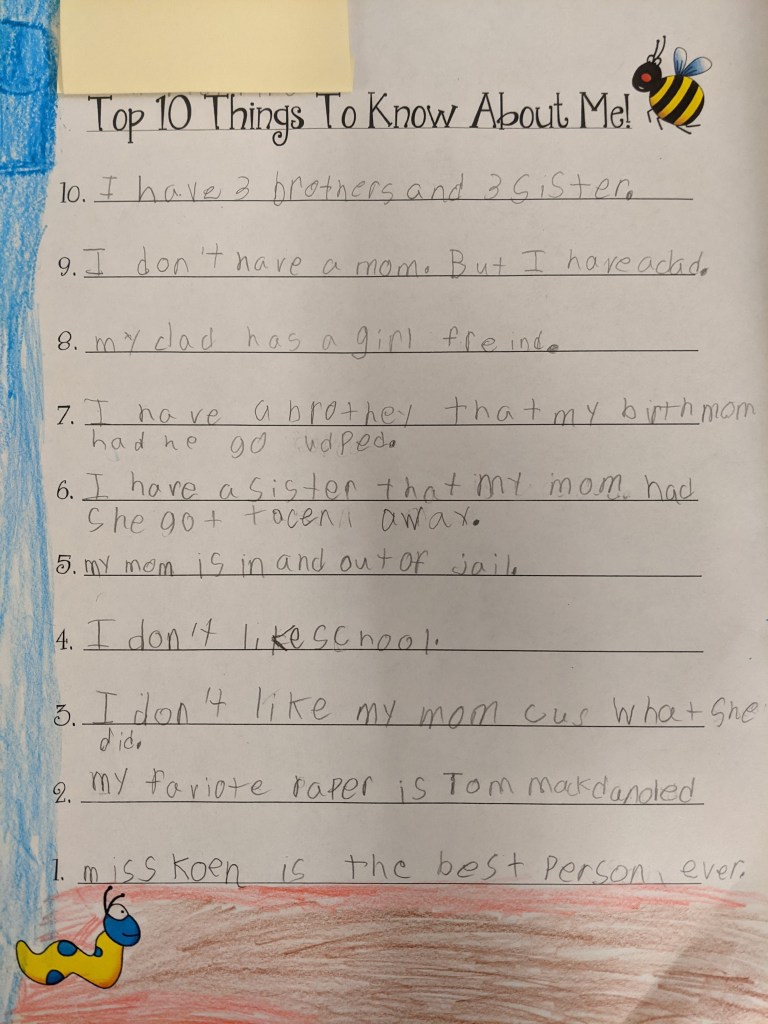
After school was dismissed for the day, I grabbed all the papers from the basket and began to sort through them. It didn’t take but just a minute before my eyes fell on one in particular and I stopped in my tracks to read it in its entirety.

There is nothing I need to say beyond just posting it. Every educator, every parent, anyone involved with children already knows how this feels on a heart. This student knew me less than 24 hours when he shared all of this with me, emphasizing to me how desperate he is to connect, to feel better, to fill a void in his life with love. I was immediately reminded of a message I had just heard the previous week from Dr. Sharroky Hollie, who reminded us that we can offer “outrageous love” to our students in need and even then, they will still want and need more.

We all have stories. We all have background. We don’t often wear it on our sleeves. I knew this student had a thick file and had several notes next to his name on my roster specifying behavior concerns. To be honest, I hadn’t read them. Even at Open House, when his dad’s girlfriend, a mom I already knew, said, “We’ll talk later,” I quickly cut her off and reassured her son, this beautiful boy, that we were going to have a great year together. This was before I knew the details. And now, knowing the gist of the details, all ten details that he chose to share with me, I know that it all really only comes down to one thing. There is just one thing that this boy needs me to know about him. Dr. Hollie was exactly right, this boy needs outrageous love. Every day. From as many people as possible.

I will do everything I can this year to teach this boy reading and spelling patterns and academic writing. I will teach him the standards and do everything I can to help him master them. But more than that, each and every day, I will remind myself that it all comes down to love. His ten things all come down to one. The one thing he needs me to know is that he needs outrageous love.

And So It Begins

It’s 5am the morning after Open House and I’m at school. My husband responds to this information with, “Of course you are.” He knows me well. This is how it will be for me for the next couple of months. I’ll be knee-deep in school work in my classroom when my alarm will ring telling me it’s time to get out of bed. I just can’t shut my brain off. (If you didn’t understand the “Teaching at 3am blog title, now you do!)

The first thing I did this morning was finish a decorative project I didn’t get done before Open House. With that off my list, I opened up my Notes app on my phone and sent all the notes I’ve been making all summer long to my school email. There were ten such notes. They vary in topic, length and value but many of them were recorded in the middle of the night when an idea just wouldn’t let me sleep. During a normal summer, I would have started working on many of the ideas in July, but this year just wasn’t normal and so it’s just now that I’m sitting down to go through them. One is already nagging at me to give it more consideration – a return to portfolios, which I will talk about more in the future, I am sure.

So I sent all these notes to my email but once I opened up my email I saw a recent posting by Jennifer Gonzalez from her website, Cult of Pedagogy. The title of this recent blog post, “Introducing the HyperRubric” caught my attention. Later today I will be attending a virtual conference with all kinds of topics and presentations and I know I will be learning new strategies about writing, so while I was in my email, I opened it up eager to see what I might already glean from the wisdom of other educators before my conference even starts in a few hours.

I started reading this post, a transcript of a podcast (it’s just too darn early in the day for me to have people talking at me, so I didn’t choose to listen to this) and within the first few paragraphs I was hooked. I heard myself utter out loud, “wow, yeah, right?” and I knew immediately that I had learned something this morning that would significantly change my writing instruction (and I haven’t even attended our district’s conference yet!)

I love this time of year. My husband and I are ships passing in the night and the night custodians believe I sleep in my classroom, but the start of the school year is always full of inspiration, creativity and excitement for me. These are the days when I can’t wait to get to school, when the moon is still high in the sky and I’m the only car in the staff lot for hours, I savor this optimism and passion. I hope my career always feels this way in August. When I stop feeling this motivation, this commitment, this enthusiasm, I will know it is time to try something new, outside the classroom. But for now, for today, I will run with it, for I know that the real work of teaching never sleeps. I know that this energy doesn’t last and doesn’t come often. But for now, it’s time to begin.

Open House

Everyone should have a night like Open House. No matter what occupation, one night every year, everyone should have an opportunity like this. It’s my favorite night of the year. The energy and joy and optimism that I come home with after Open House should be bottled for all the exhausting, frustrating and maddening days that inevitably come when you are a teacher.

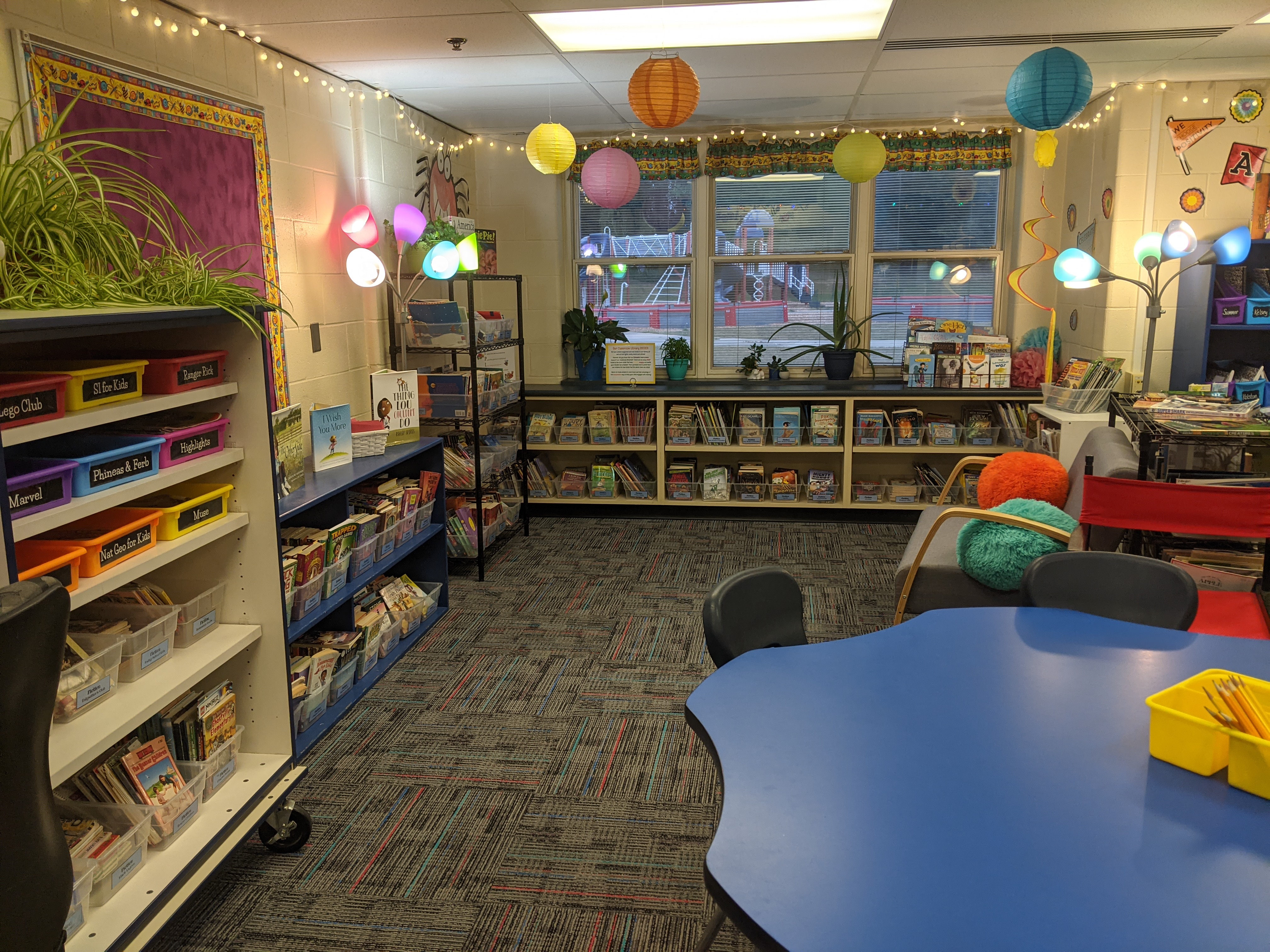
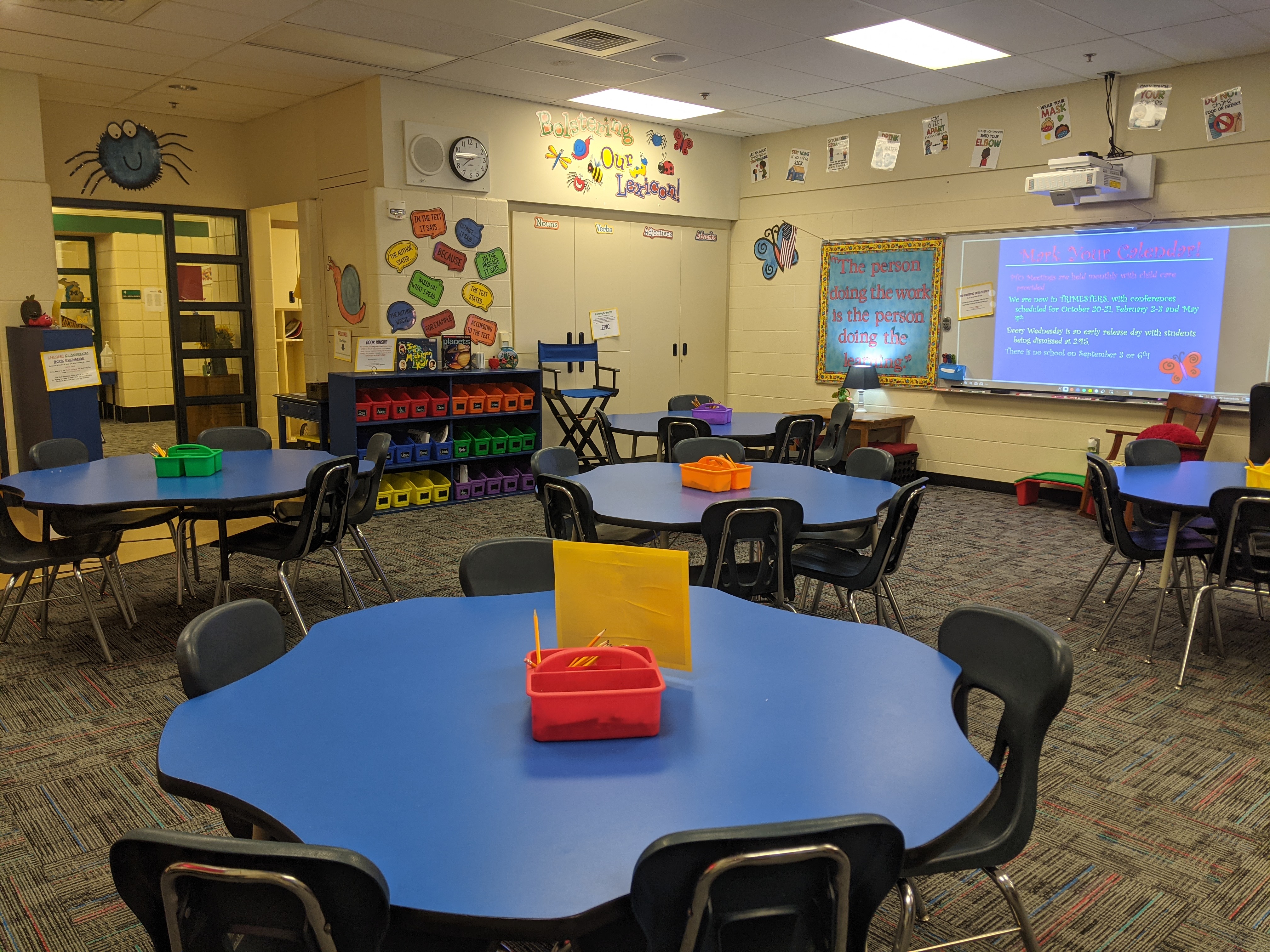
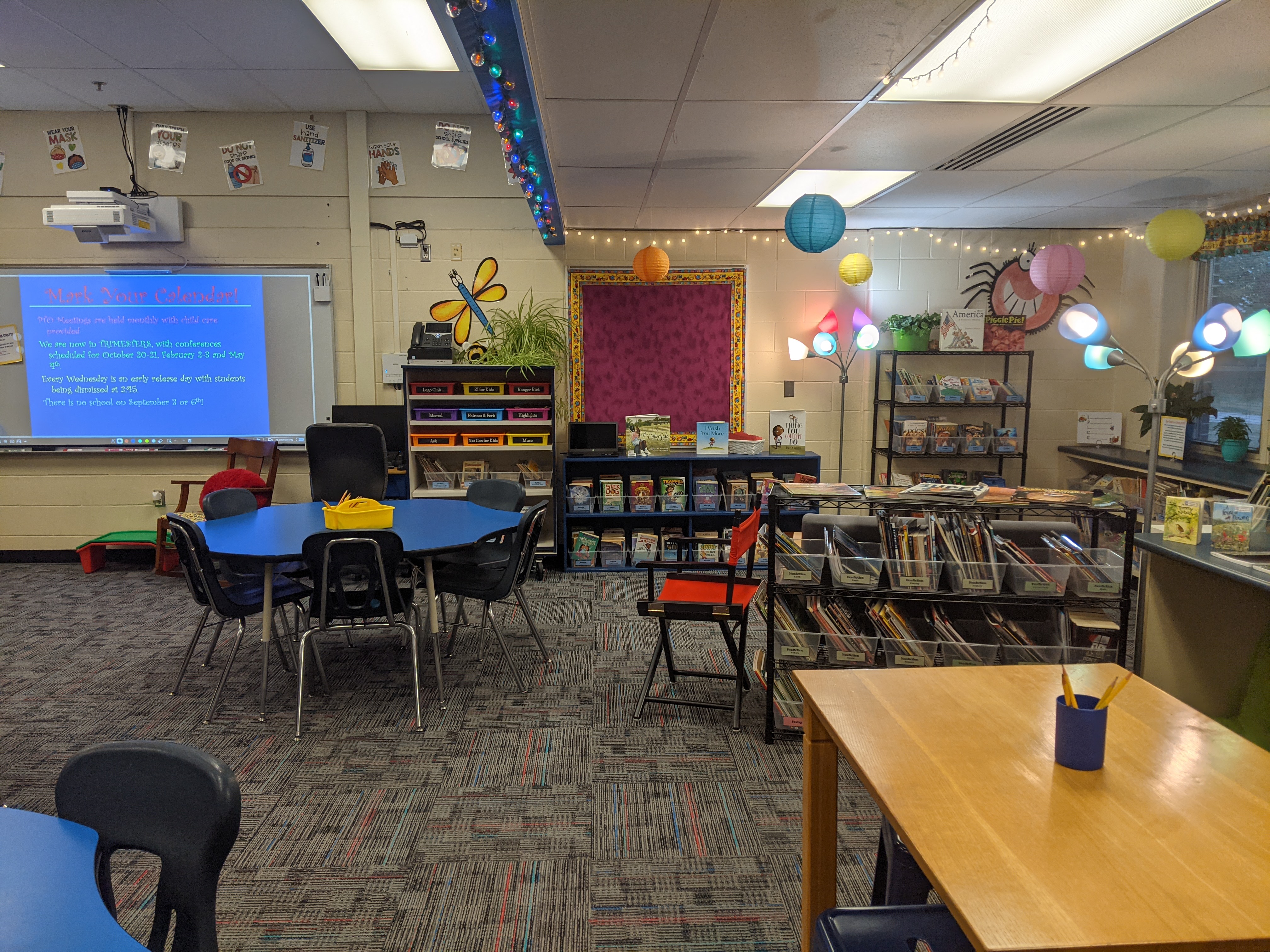
My room is at its finest. It’s clean and bright and colorful. Families walk in and smile. Kids come in and ask, “Can we really sit here?” referring to the under-cabinet pillow spots, or the little couch or beanbag chair. Fellow bibliophiles virtually run to the classroom library, looking over the choices, salivating at the thought of having so many at hand every day. Even the reluctant students, the ones who are only attending because their parent forced them to come meet their new teacher, smile at the candy tucked into their mailbox, or the way I conspiratorially tell them the papers are homework for the grown-ups tonight.

There are always new kids. Kids who have moved here from elsewhere, or even more commonly this year, kids who learned virtually last year and aren’t quite sure they will know anyone. New faces means I get to do introductions, which I always do quite dramatically. “Oh my gosh, Sarah, do you know Juan? No? Let me introduce you!!” After the introduction, I always excitedly proclaim, “That’s just crazy! You both have been in this room for less than five minutes and you’ve already made a new friend!?” I never want a student to feel alone and friendless. Ever.

I get to talk about books, Legos, summer vacations, siblings that I know, cousins that I don’t, pets, and everything else a new fourth grader has been dying to tell me since they first knew they’d be in my class. I get to see parents give reminder nudges about manners, reassuring support for the bashful children and calm redirection for the rambunctious ones. I learn so much in the short time families are in my room!

Tonight, a grandmother with custody wandered around my room for several moments before exclaiming to me, “I absolutely love this room!” She gushed on and on about the lights, the plants, the colors, the books…all the things I love about my classroom, too. It’s an excitement that is contagious and makes all the work, money and time that I have poured into my room seem extra significant. I love when the kids love our classroom, certainly. But when a parent or guardian is excited about it, then I’ve already put some positive points in my teaching bank with that family.

Families think Open House is about the kids. That it’s about making them comfortable with a new room, a new teacher. That getting this preview will help them transition confidently into the new school year. That’s all true, and I hope that it does provide reassurance and a spark of excitement for what lies ahead, but the truth is, Open House is the very thing I need each year to remind me of all the things I love about my chosen profession.

Open House is magical. It makes me forget, if just for one valuable night, that some of these students (or their parents) will drive me absolutely crazy. It makes me ignore how long my to-do list already is, or all the lessons I have yet to plan or the stack of stuff I crammed into a cabinet earlier in the day. It keeps me so focused on the most important part of my profession – on making kids smile, laugh and love a learning space – that I don’t have time to think about anything else. After the year we all had last year, meeting families and students in person this year was exactly what I needed to kick of the year and to begin with renewed optimism, overflowing joy and the confidence that these kids are going to show up next week as giddy and excited about our year ahead as I am. Or maybe it’s the other way around – that I am so full of joy and enthusiasm that I will be sleepless and excited next week, as though it is my first day of fourth grade. Either way, the night worked it’s magic and I find myself right where I need to be – excited and most certainly ready to begin.

Putting the FUN Back Into Learning

I was asked by my curriculum director to give a brief recap of summer school during our district-wide professional development today. What I initially wrote was a bit long for the occasion, so I only shared a portion of what is published below, but I thought I would share my response in its entirety as a reminder to myself (and others) of what really mattered in education this summer and as we move forward – and not what just really matters for the kids, but what teachers need, too – FUN.

I taught summer school here in Paw Paw for many years, in fact, I worked as a paraprofessional for the summer program before I was even hired as a teacher here.  I stopped a few years ago for several reasons, some personal but also because I professionally felt like we were missing the mark with our summer agenda.  While I’m being honest, I felt like we were missing the mark in our educational agenda year-round.  In fact, when Corey’s email soliciting summer school attendees and staff arrived in my inbox, I had been tweaking a cover letter for a job posting outside the classroom, outside our district, outside of education entirely.  

Coming on the heels of the most challenging year both personally and professionally for me, Corey’s email would have been completely disregarded and deleted without me even reading it had it not been for two things that caught my attention.  First, the words “outdoor programming” and second (only because I read it second), was the amount of the compensation package for teaching 22 half days.  I may have read the email more carefully because the notion of “outdoor education” is near and dear to me, but when else in my teaching career might I ever make $50 an hour?!  It was a hard offer not to consider seriously.

As it turns out, the “outdoor educational programming” wasn’t just a ‘notion’, it was a deeply felt philosophy and better yet, instructional practice that Corey had been a part of in Fennville.  Over the course of all those half days, I found my own philosophies about teaching being played out in front of me in meaningful and very tangible ways.

The pandemic has been a professional (and personal) challenge to each and every one of us.  We have seen instructional practices that we know are essential to learning take a backseat to safety measures and precautions.  We have tried, these past 18 months, and many times in vain, to intervene with students we could see and feel slipping away, becoming more disillusioned with not just the concept of school, but of the empty promises within it.  We have tried, many times again, in vain, to convince even ourselves that we will “get back to normal” at some point and we will once again put those instructional practices back to use.

Or maybe we won’t.

For 21 instructional days, I spent time, significant time, outside every single one of those days. And the best part was that I spent that time outside with kids who were as eager as I was to be out there. We weren’t just outside on a playground playing tag or swinging or otherwise socializing, but we were all engaged in meaningful outdoor experiences.  We were in streams, literally knee-deep in streams; we were in fields with binoculars, we were in the woods building shelters, identifying plants and learning how to start and cook over a fire.  We personally saw, listened to and identified birds; we got to be up close and very personal with four different birds of prey; we hiked, we plodded, we smelled like a highly under-marketed combination of bug spray and sun lotion.  We fished, we explored, we categorized, we drew, we reflectively wrote and we read stories and books that not only connected us to the learning we were doing outside, but connected us to the community we were building together inside.  

And while the kids were learning all these amazing things about the natural world around them (and about themselves and each other!) I was learning an awful lot about the kids in my classroom.  Like the fact that many (many!) of them didn’t know what dew was on the grass.  Many struggled significantly with following explicit directions.  Many have never been camping, never been fishing, never spent time exploring in the woods, never even been to Lake Michigan. 

At the onset of the program, Corey reiterated to the staff that only one question and one answer really mattered this year with regard to the success of summer school.  At the end of each day, he encouraged us to ask ourselves, “Did we have fun learning today?” and if the answer was “yes”, then it was a successful day at summer school.  Without a second’s hesitation, the answer each and every single day was a resounding YES.  But as Corey thought it might, knew it might, the success did not just end with providing the students with a positive school experience after a tumultuous year.  For those who have used F&P texts for benchmark assessments, you can all easily recognize how the experiences in these 21 days provided key background knowledge and context that will greatly increase the comprehension of texts such as “Animal Instincts”, “Super Senses” and “Animal Adaptations.”  Not once during those days did I have a student respond with the all too-familiar “I don’t know what to write about” when we reflected on our day of learning. They wrote about trees, animals, teamwork and recycling.  During the amazing lunches (thanks, Korrie and staff – those meals were top notch!) I overheard discussions about the ethics of keeping zoos, of climate change and of how we can help diminish pollution in our environments.  And these were third graders

So the challenge is now before us.  How can we all, not just those of us fortunate enough to participate in the summer learning program, but all of us continue this work?  How can we all continue to find ways to not “bring the world into our classroom” but to take our students out into the world?  How can we build bridges connecting our essential standards to our students in meaningful, tangible, hands-on ways, ways that go far beyond just academic success.  How can we create learning opportunities that start and end with “fun” but secretly hold a tremendous amount of learning?  How can we not only use the video games and technologies these students hold so dear, but also introduce them to the natural world around them in equally engaging ways?  I got some great ideas this summer, but I know I have a long way to go as an educator to make this true in my classroom.  For now, I will simply ask myself, whether behind a mask or not, whether three or six feet apart or not, to welcome a new “normal” to my classroom.  One that starts and ends with “Did we have fun learning today?”  And, at least for now, I will give my cover letter a rest and make this year the best year both personally and professionally that I can. Thanks, Corey, for the opportunity, the experience and the vision for a new “normal”. 

Finding My Marigold

She used a metaphor I could easily relate to. Find a marigold; avoid the walnut trees. I understood exactly what she meant with the analogy. Marigolds are wonderful companion plants. I have them in my garden this year alongside the tomatoes, peppers and other plants. They help keep the rabbits away as well as many garden pests and they also help the vegetables grow larger and stronger just by being nearby. Walnut trees on the other hand give off exotoxins. Nothing grows or prospers around the walnut trees in our yard. They stand alone, poisoning the vegetation around them until nothing exists beneath.

She was referring to choosing a mentor, and the analogy is one of the best I have read. It makes exact sense. Find a colleague who will not only help keep the problems and negativity away, but will also help you grow and strengthen as a teacher. Avoid those professionals who are already burned out, who want to bring you down and discourage you instead of lifting you up.

Finding my “marigold mentor,” however, hasn’t been easy. Sure, I have teachers around me who are full of positivity and are continuing to grow as a professional, but their lives are already quite busy and they aren’t necessarily able to help me navigate my own professional journey. I also know who the walnut trees are and while I try to avoid those, sometimes proximity and administrative decisions make it hard to avoid those staff members. While I realize we have to work with the walnut trees, I know they aren’t the ones who will help pull me back into the profession I am disenfranchised with right now.

To find the right mentor, it turns out, I just had to sow better seeds. I’ve been struggling with the teaching profession for the past four or five years, but I only got vocal about it in the past year. I had privately been struggling and privately been frustrated and privately been searching for next steps and options out. This year I chose to speak. I decided I was preventing myself from finding solutions by not using my voice and I started to advocate for myself. In short, I started talking with anyone who would listen. I told them about my frustrations and my need for something new. I shared with them my talents, ideas and thoughts and I listened as they gave advice and pointed in various directions and suggested people and places to connect with. I took copious notes, made numerous follow-ups and took joy in the fact that I had new ideas, new perspectives, new suggestions to work with.

And out of these conversations, a marigold emerged. I’m not even sure that he realizes he is my marigold, but he voluntarily stepped up and into my professional journey not just once, but again and again to help guide me. He has given me direction, suggestions, insight, feedback, support, encouragement and hope. He has given me hope. Pandora herself couldn’t grasp how priceless hope has been to me after this last year.

In my fourteen years in the teaching profession, I have worked for seven principals, four curriculum directors and five superintendents. I have never had any one of those administrators initiate connection with me like my current curriculum director has. His job title has nothing to do with mentoring staff and his duties are plentiful and time-consuming enough to prevent him from having the time to even do so, and yet, here he is, sitting in my classroom, mentoring me. He knows as well as any good educator that curriculum isn’t what drives student achievement; it’s a tool, certainly, but it’s good teachers using good practices and methods that make the difference. After one initial conversation where I explained my struggles, he has taken the opportunity on several occasions to follow-up with me with ideas and thoughts and encouragement. Where other administrators have responded to my conversations with, “Let me know if you need a letter of recommendation,” (essentially encouraging me to leave my position) this marigold has come back to me time and again to help me find reasons to stay and to flourish where I am, and to begin to see that my next steps might not be outside the teaching profession but within.

While I am blessed beyond words to have Corey as my “marigold mentor,” his impact reaches far beyond just my professional journey. It goes well beyond just our district and the people within it. The fruits of his labors are spread far and wide and I am ever so grateful to be within that realm. We will all prosper and grow stronger with such leadership among us. He has a vision for our district that brings hope to not only the frustrated staff but to the frustrated student body as well. He has his finger firmly on the pulse of education and is using his position to help steer education towards better practices, better models, better outcomes by way of better teaching.

To say the past 18 months of education has been like the opening of Pandora’s box is as apt a metaphor as the marigold and walnut tree concept. All the chaos, mayhem and less-than-ideal teaching practices have made many professionals in the field question their place and their future within education. The pandemic months have made many students choose staying home and learning virtually over connecting with peers and adults at school. But with people like my curriculum director leading the charge, we can begin to put all that chaos and mayhem back into the box and firmly close the lid. Together, we can give each other hope, and that hope can lead us forward in meaningful, life-changing, positive ways. My hope is that we all find a marigold as dedicated, empathetic and involved as Corey.