Stability

Normally, it’s my favorite day of the year. Open House means nervous but excited students, hugs from returning students and the optimistic bliss of a new year ahead. But the question we all, students and teachers alike, normally wonder, hung extra heavy on my heart tonight: What would this year really be like for all of us in Room 15?

While my Google presentation cycled on the projector with bright colors and cheerful fonts sharing tidbits of fun facts and information about our class and school, I greeted families and introduced new students to each other with an enthusiasm I’ve never had to fake until now. I laughed and I joked and I listened and I assured and I did all the things I know to do, but for the first time, I felt an uneasiness, a concern, a worry that had begun carving into my heart last spring – a concern that I could never be enough for these students this year, a concern that my game face, my faked energy, my quasi-enthusiasm were going to fall short and that instead of blossoming under my care, I would leave these students woefully short of where they otherwise might have landed.

I tried to shake it off. I tried to hear the words that so many colleagues have uttered in meaningful comfort, “These students will be the better for it. They will learn what it means to love and be human and what it means to be part of a family.” I tried. I really did try. And for the most part, I think I succeeded. At least I don’t think anyone else in my room was ever aware of my trepidation.

But near the end of Open House, a family entered my room. Their child, one of my new fourth graders, was quiet and unassuming, but the parents wore their concerns on their faces from the moment they walked in. With whispered voices and nervous glances to make sure the student was distracted elsewhere in the room, they shared with me, quickly, with urgency, some of what was on their mind. The love for their child was palpable. And so it was that while I stood there, in my bright, colorful classroom, surrounded by books and kids and tables with newly sharpened pencils, that the words of this father struck my heart and unleashed my unspoken fear. “We just really hope this year is a more stable year,” this worried dad said.

He went on to explain that last year the student’s teacher had unexpectedly and suddenly left, leaving the class with a long-term substitute. The dad spoke kindly of both the teacher and the substitute but went on to express how the changes disrupted his child and that this year, this year, they just hoped that more stability might help get their child back on track. To be honest, I don’t know whether I nodded, or smiled or made any physical movement that indicated agreement or understanding, I just know that I stopped my mouth from even opening, knowing that I could not say a single thing in that moment that would help and for fear that something might come out of it that would only add to their concerns.

Later, in my empty classroom, I stood alone, right where I had stood while talking with those parents and I felt the weight of the world. I know what it’s like to worry about a child, to want the best for them at school and to want them to have every possible bit of help and support they need. And here is this precious being, entrusted to me during the year I know I will be less that what I might be, but already coming to me having been through this before.

Before leaving for the night, I emailed my principal and shared the encounter and my concerns. I followed that up with a conversation the next time I saw him and I encouraged him to please contact this family; to give them the opportunity to not just hear about my situation but to have the chance to perhaps shift to a new classroom. I can’t do it for all my students, I realize, and I don’t think it’s necessary for the others, but I can’t let this family walk blindly into the same situation given their concerns.

The matter is out of my hands at this point, and I will support my principal in whatever manner he decides to proceed with this situation. But my heart weighs extra heavy tonight. Stability seems like a small and very reasonable request for a ten year old’s classroom. I don’t know a thing about this student, in fact, I might struggle to remember exactly which one they are come Monday, but my love is already there. I want the best for each and every one of them. And that started before they even walked through my door.

Enthusiasm

I sat in on my first meeting of the year yesterday, a brainstorming meeting meant to gather ideas for upcoming professional development opportunities to support writing. I walked away excited, which is easy to do in August, when ideas feel fresh and possible and the concerns I have feel relatively small and addressable.

We agreed, all five of us in attendance, that building enthusiasm for writing – creating a school culture that celebrates writing in a variety of ways – was our top priority. Not only would this help our students get more excited about writing, but it might help some of the staff as well. Writing, as it turns out, isn’t a favorite subject for everyone to teach, and even those of us who personally love to write can find teaching it to be difficult – we don’t personally relate to the lack of motivation, or we find the process easy and so we aren’t always looking out for the areas where students might struggle.

In addition to the meeting, I’ve finally gotten back in to my classroom. I don’t normally take such a long hiatus over the summer months, but traveling with my husband and seeing friends and family were the priorities this summer, and so it has only been the last few days that I have started tackling the lengthy back-to-school to-do list.

Even as daunting as that list feels, ranging from getting the classroom ready for Open House, to getting my first week lessons planned and materials gathered and even more importantly, looking at ways to improve my overall teaching methods in a few areas – and even with my husband’s terminal diagnosis weighing heavily on my heart and mind, it’s hard to not feel enthusiastic as we start another year.

Small tweaks in my classroom arrangement, adding yet another bookshelf to house and make easily accessible the new books I gathered last year, bringing in a fresh plant or two to replace the ones I killed by neglect over the summer, all these things get my juices flowing and my heart pumping. As with the writing meeting, everything feels fresh and possible and my concerns feel small and addressable. For now.

Deep down, I know that this year will be unlike any other for me, personally and professionally. I know that my husband’s health has to take top priority and I know that my need for extended time off is not a matter of if, but only when. But I also know that my administrative team and my colleagues are there to support me. I know that my principal has already lined up a great sub for me, who will jump in for the appointments we have now and will be ready to jump in fully when I need a long-term sub down the road. This doesn’t just ease my mind personally, the thought of keeping consistency and having a familiar person in my absence for my students eases my mind professionally. I don’t want this class to suffer from all that I am going through outside of school.

In the next few days, students will begin receiving their welcome letters announcing their classroom teacher for the year. I hope that each and every student who receives my letter will start to feel the same enthusiasm that I do for the upcoming year. Everything is possible. Our concerns are minor and we can handle them together. And for those students who don’t get enthusiastic about the idea of returning to school, I hope that I can change their attitude about learning within the first few moments of being together in this space. I hope to make all my students as enthusiastic about this year as I feel right now and I hope, when things feel impossible and concerns feel insurmountable, that I can find ways to restore my enthusiasm and to help my students feel the same.

The Last Day

I wasn’t at school yesterday. It was a half day and the whole day was “Fun Day,” full of amazing events and activities to celebrate a year of learning with all our kids. I wasn’t here because we had received devastating news about my husband’s cancer and I could not for the life of me get my game face on and be the happy teacher the kids needed me to be.

Today, after the second night of little to no sleep, I drug myself out of bed, determined to be energetic and enthusiastic for my students. These kids have gotten a raw deal this year with all my absences and my divided focus and I at least owed them a positive send off and conclusion to the year.

And that I did. We worked on memory books, signed autographs, talked about our favorite fourth grade events and activities and had a wonderful morning together. I was able, for a few short hours at least, to tuck cancer to the back of my mind and focus my energy on the students. Admittedly, it wasn’t perfect deception; the kids that push my buttons were at it again today in full force and I had to keep looking at the clock and reminding myself that soon they would be gone. There were also gifts and touching notes from students and their families, many acknowledging the challenges I’ve had this year outside of school, but I did what I could to stay positive, focus on the kindness and not get caught up in all the emotions of feeling less than what these kids bargained for, needed or deserved this year.

Just past noon, I hugged the kids one last time and sent them on their way, a bus ride the only obstacle left between them and summer vacation. With my colleagues, I walked out to the bus loop for our end of the year tradition of waving goodbye to the students as they rolled out of the lot.

But, as I waved goodbye, I found the tears rolling and the emotions came so fast and so suddenly that I had to retreat to the building and all but run to my classroom to privately sob. My tears and grief weren’t about the departure of the kids, it was a moment that caught me off guard as I stood there wondering what my world would be like a year from now and whether my husband would still be here on the last day next year.

The colleague who found me and rescued me from the tsunami of tears I was under is no stranger to such loss and pain. And as I went about my afternoon, trying to distract myself from those emotions, other colleagues stopped by and I realized how many of us on staff have experienced tremendous loss in our personal lives.

Ever since my husband’s diagnosis, I have struggled to keep all the emotions of my home life separated from my classroom. I have tried, in vain many times, to keep these students insulated from the realities of what I was dealing with. Many of these children, after all, have tragedies and traumas of their own and surely don’t need to bear the weight of any more. And in addition to the weight of my personal life, I have felt so very guilty for not being the fully-present, fully-engaged, all-in teacher that I have been in years past. My absences bother me more than anyone might know. Every time a sub left me a note about their less-than-stellar behavior, I felt personally responsible for not having been there or for being gone so much, or because they had so many different subs. Even as they hugged me goodbye and told me how much they loved me or how much they were going to miss me, or how much they enjoyed ELA this year, I felt a pang with every word, thinking, “If only they had me before…”

It is no wonder, then, that when they left, the emotions volcanoed to the surface, overflowing my ability to control them.

Earlier this year, when I voiced this struggle to a colleague, he reminded me that part of our job, like it or not, is to teach these students how to manage life. And that while we might hope a smooth sailing course for all of them, modeling the struggle and how to navigate the rollercoaster may prove as valuable as learning where to use a comma, in fact, it may be far more important.

Today, on my knees in my classroom, with gasping sobs, I was reminded of our humanity as teachers. I was reminded that who I am is an important piece of how I teach and that all of these experiences come together in this room, in this community with my students. As I go forward into a very uncertain future, I hope to remember this. I hope to allow myself the ability to share more than just the funny anecdotes from my life, but to allow my students to see how we live all of life.

Notes

I wasn’t the only one leaving school hours after the dismissal bell, but I was probably the only one there not working on report cards. I stayed late to finish printing and laminating a project the kids had done. Today had been rushed, hectic and I spent every spare moment wrapping up student work and getting things ready to go home. I needed the time after school to finish and to write sub plans for tomorrow.

As I tidied up my room, I found myself stacking Post-It notes and pieces of notebook paper – all with tidbits on how to improve next year. My notes have notes. Some notes are basic logistics: use 3/4 inch combs on the portfolios, or make the reading station packets with fewer pages. Some notes are more complex, such as looking at improved ways of tracking the use of reading strategies during independent reading times. And Lord knows these scraps of paper and Post-Its aren’t the only notes I have. My phone is FULL of notes I’ve written in the middle of the night, or during a meeting, or even riding in the car that I want to remember to do or change about my classroom.

What struck me today as I put all these notes in a pile, was something I first started to notice about myself a couple months ago. Back in early March, I spent nearly an entire weekend at school putting together explicit and detailed sub plans. I wasn’t sure then if I would ever need to be suddenly out, or if I might have to leave mid-day to help with my husband, so I wanted to make my daily lesson plans something a substitute could easily navigate with little notice or support. Those days that I spent planning, felt not only cathartic but fulfilling. I enjoyed the process of laying out lessons and improving on instruction. I found bliss in the organization, the structure, the control, but in equal doses I loved being able to find new ways to infuse my lessons with engaging materials or more interactive instruction, or more variety in the practice or production of the standard. So even as I tidied up my room today, making a somewhat neater stack of all my notes, I found myself getting excited to start tackling these ideas. In short, I have begun to realize that I find tremendous joy in the process of thinking and planning for instruction – even more so at times than actually delivering the instruction.

This is not to say that I think this leads me out of the classroom and into writing for a publisher or some such. While I have kept my eye open for “next step” positions, I am quick to realize that those who plan instruction without delivering it, far often miss the mark. I know that in order to keep improving on how kids learn, I need to remain hands-on in delivering the lessons that I create or adapt or modify.

But as I look ahead to the summer months, it helps me explain, if not just to myself but to my beloved husband, why it is that after enjoying a complete break from school for a couple of weeks, by early July I am always working on something for the classroom. I’m always designing some materials, or reorganizing some unit of learning, or even creating or improving documents to use in the fall. I just can’t help myself. I enjoy that. So, while I feel this year coming to a close, I already have my eyes on next year. I am already thinking about ways to improve and things I want to do differently. I am already starting lists (upon lists, upon lists…) that I want to work on this summer.

And for me, that never feels like work. That is the part of my job that makes me feel energized and excited. I’m ready for summer, but not because it brings me a break from the classroom. I’m ready because for a little while, I have a significant amount of time to tweak and play and research and adapt and amend and create my lessons. And that is what will make me a better teacher in the fall.

Tangible

We were parked on the freeway, stuck in construction traffic, so I reached for my phone. I wasn’t at school; we were on our way back from U of M hospital and James was already on his phone, looking at Google’s suggestions for alternative routes around the delay. I read two text messages and then saw the notification pop up on my phone. It must have alerted him as well, because I had hardly even read the headline before I heard him say, “Don’t read it. Just put your phone down.”

At that point, the news only knew that three children had died as well as one adult, and that was all of the headline I read before I comprehended his warning and set my phone back on the dash. This was not the first time he had tried to protect me from knowing about a school shooting. And as I sat in the driver’s seat, remembering how many have occurred in my memory, I prayed to God Himself that this would please, please be the last.

Many in my generation (and certainly others) cite the twin towers as our “Where were you when…” moment. And while I remember that day vividly, it does not provoke the same deeply emotional – tangible – response in me as the memory of where I was when I heard about Sandy Hook. James warned me that day, too. He had texted me while I was teaching my second graders, saying only, “Don’t read the news. Don’t even look.” But whispers abound in the teacher’s lounge and despite trying to wait until I was home to absorb what had happened at that elementary school in 2012, I knew just enough that I struggled to get through the rest of my day, just enough that I kept hugging the kids, just enough that I kept looking at my classroom bathroom and wondering if I could, in fact, fit all of us in there if I had to.

Maybe that’s what makes this different to me. Maybe, if these shootings, these absolute massacres, happened repeatedly in gas stations, or retail stores, or corporate offices, or wherever everyone else works, maybe they would understand what it is like to be a teacher in these moments. We don’t just read about the event, we don’t just watch it on TV, we feel it in our very bones.

I was awake late into the night last night and early again this morning. I cannot shake the tragedy. I cannot make myself stop thinking about it. I absolutely ache for those parents, those families, those teachers. But my mind also keeps running over and over and over and over the unknowable variables and how I would try to protect my students. This morning I just kept thinking about how I would get my students out the windows. I ran it over and over and over and as I pulled in to school, I was sobbing because I know that no matter how much I think about it, no matter how much I analyze and prepare, no matter how many goddamn “inside threat” drills we run, we can never ever prepare ourselves for these situations. They are unthinkable. The decisions the teachers in Texas had to make in a split second are unimaginable.

My entire day today was filled with such thoughts. There is no escape from it when you work in the same exact environment. And it is never, never once, about a fear of dying or a worry that I might get hurt, or anger that my life could be taken by such senseless violence. It is always and will always be an absolute immeasurable panic that despite training and drills and conversations and thinking- endlessly analyzing- I could never possibly protect all those beloved children in my care from such trauma. And that thought haunts me.

I came home tonight and sat with my husband out by our garden, overlooking the pond. We talked about this and that and all the frustrating things going on in our lives that we cannot control and it wasn’t until later that I finally let all the tears roll and cried while I tried to explain, again, how helpless and terrified I feel that this keeps happening. By quick count there have been 14 mass shootings at K-12 schools since Columbine, killing nearly 200 students. I do not know how to live in a world where this happens. I do not mean this as hyperbole. I genuinely do not know how to live in a country where the answers are too political to ever become solutions. Where our children’s safety is less of a concern than the individual right to bear automatic weapons.

Despite the fact that I teach fourth graders, ten year-olds are still afraid of tornadoes and the thought of fire burning down the building. Each and every time we have these drills, I show the kids the cinder block walls, the multiple layers of walls between us and a tornado, the special windows that won’t shatter, the fact that the room couldn’t burn if it wanted to. I tell them every time, “Believe me, if there’s a tornado or a fire, I want to be right here. This is the safest place to be for a fire or tornado!” But, when we do drills for any kind of human threat, I know I cannot make that promise. I cannot tell them that school is the safest place to be. We can talk about all the measures we have in place, and our district has many, many precautions and procedures and we continue to add and improve, but still. It only takes a headline like yesterday’s to remind me that despite all these steps, despite all the training, all the drills, we haven’t stopped the shootings.

And I have no idea how to face that reality anymore. How can I, when tomorrow, I will walk back into my fourth grade classroom, full of ten year-olds – just like Robb Elementary in Uvalde, Texas – just like Eva Mireles did on Tuesday. How can I not tangibly feel this tragedy? How do any of us let this be a reality any longer?

Not in the Lesson Plan

I have never, in all my years combined, missed as many days of school as I have this year. Without double-checking, I believe I just exceeded a dozen days and I have a few more already on the schedule before the year is through.

My classes have struggled in my absence, the same way they struggle in any of their classes or specials when there is a substitute. It has little to do with me, although I wish beyond wishes that I knew how to help students grow and employ personal moral codes that would encourage them internally to make good choices and not to just exhibit good behavior when they are in fear of being caught. But that’s a topic for another day.

Today, I was at school, but my co-teacher was not and her class really struggled during the morning. Really struggled. Our Dean of Students stepped in and spoke with them – saying, I am certain, many of the same things she and others have said to them before when I was absent and they made similarly bad choices. By the time they came to me, at our after-lunch switch, I felt stuck between wanting to say or do something to make them change and yet not wanting to be one more adult harping on them for the same poor choices. i know that we have taught the expected behaviors. I know we have taught them over and over. I know that we’ve tried praise. I know that we’ve tried rewarding the good behaviors. I know that we’ve even bribed and offered incentives. And I know we’ve laid the hammer down as well. At this point, I wasn’t even sure what more to say or do.

But last Friday and again this morning at our staff meeting, we had brief presentations about restorative justice or talking circles. These conversations at our staff meetings were meant to be an introduction to us about the practice, although I think many of us have heard of the idea and even used a variation of the theme during our years on staff. While I would consider myself far, far, from “trained” on the matter, I decided then and there to just try it. To try something. To just change things up and see if I could somehow get through to these kids. More than that, I wanted these kids to get through to each other. And I thought the circle might help give a voice to them all in a way that might promote change.

We shoved the tables out of the way and the students sat down in a big circle. It took a moment or two until we could all get settled and another moment for me to find a “talking stick” which ended up being my empty water bottle, but it would do. I joined the circle and took a deep breath, trying to remember what ground rules I should talk about before we got started.

Even as I explained what we were going to do, kids were already nodding. People kept knocking on our door for a whole variety of reasons and the kids were getting frustrated – they wanted to do this thing – but we stayed patient and were finally able to begin.

We made a lap around our circle to talk about how the morning’s learning environment, or lack thereof, had made each of the students feel. The talking stick passed through many hands in silence before it finally came to a brave student willing to break the ice, but then the flood gates opened. Many thoughts were shared. Frustrations, disappointments, worry, anxieties. It felt very open and very honest for a group trying such a conversation for the first time.

The second lap, we tried a different question. I asked them to reflect on how they thought the kids who made good choices came to do so. What did it take? How are some kids capable of doing that when others struggle? Lots of great ideas were shared.

Both laps had revealed that the issues earlier in the day had been caused by many of the students. No one had named names, no fingers had been pointed, but it was clear that it was a massive group and not just the usual few. This had been a large scale issue and it had caused large scale feelings.

I took a risk with my third lap around, wondering if I was breaking every rule, but I really wanted the kids to truly hear each other. The third lap I told them that they could say something specific to someone specific, but it absolutely had to be done with kind intent. I demonstrated using the name of our fictitious naughty student, George, whom I often use as my “what not to do” example. I said to the circle, “For example, if I am particularly frustrated with what George did this morning, I might say to him, ‘George, I think you are wickedly funny! You crack me up all the time! But when we are in the middle of the math lesson, that’s just not the time. I really need to hear what’s being taught. Tell me at lunch. That would be a great time to make me laugh!”

Nods all around my circle.

And so it went. The kids who had been the instigators and even some who had followed into bad choices passed the water bottle without a word. And the others, in such tremendously kind ways, told their peers how much they really liked them, but what needed to be different, especially with a substitute.

We had taken an enormous amount of time, but I had the kids do one last lap. Our last lap we told one thing that we loved about this class of kids. I wanted us to end on a positive note and I wanted them to see how much of a family they really are.

On that last lap, one of the students said, “I really like this class. And I really liked this process. It showed us different perspectives and that we all have a voice and maybe that will help us to change.”

I probably did it a hundred ways wrong, but I think, for us, just for the moment, we got at least a couple things right.

And for Chris, thank you for reminding me about this practice. You saved me twice today.

In The Zone

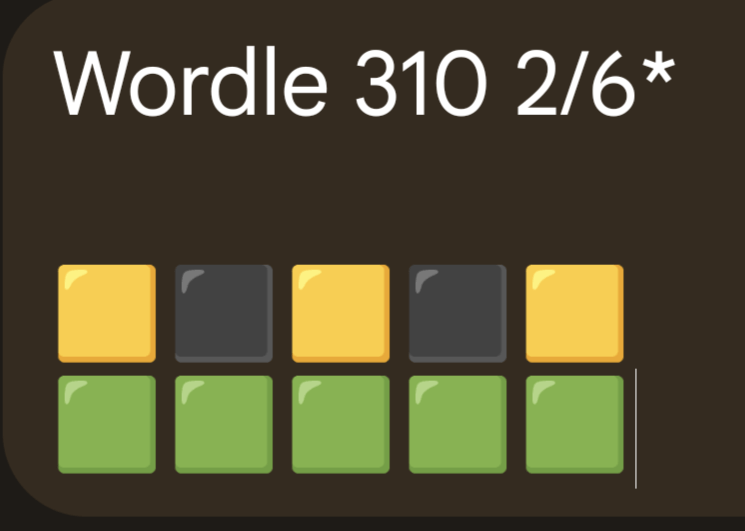
It’s 4am and I just solved Wordle in two.

Yesterday, however, I fell short on the Sunday crossword (no, not the NY Times version, I’m not that good). While I have gotten very close a couple of times, I have yet to successfully solve one of those and I am more often left feeling frustrated and disappointed.

But today? Wordle. In two. And despite the early hour, I feel energized, excited, motivated to accomplish something else, as though my day can only continue on this high level of success.

Wordle requires me to only get one five letter word right. I probably got somewhere around fifty words right on the crossword puzzle and yet it left me feeling frustrated. I didn’t get Wordle in two because I guessed well. I had to really think about letter patterns and syllable patterns and there was a lot to this word today that used what I know about English that helped me get it successfully in two attempts. So why don’t I feel even more energized from all the words I got correct on the crossword?

It is a quick and easy reminder of where my students are at, or as I fear is more often the case, where they aren’t at. In educational terms, we call it the “Zone of Proximal Development,” but more simply put, it’s the place where a learner is challenged just enough that it’s worth the effort, but not so challenging that it’s out of reach and frustrating. It’s a careful balance of providing tasks that a student can do with minimal assistance, and yet without being so easy as to be worthless. The rate of return on our effort has to be possible; we have to believe we can succeed in order to put in the work. Wordle has that in spades for many of us. It’s just challenging enough that we feel a sense of accomplishment by solving it, but it’s not so difficult that we quit, or get frustrated (at least not often). The crossword, however, is still just beyond the zone for me and so it leaves me feeling inadequate, even though I have actually been quite successful, even when I only solve 80% of the puzzle on any given Sunday.

In an ideal classroom, we would teach within that zone for each of our students. But this means that at any given moment, I know exactly where each of my students are in their learning, on the myriad of topics we cover in an elementary classroom. Not only that, but it also requires me to have the skills, resources and time to provide exactly what each student needs next to keep them “in the zone.” Ideal, yes, realistic? Not so much. But, my joy and enthusiasm over Wordle today reminds me how important it is that I try, how critical it is to my students that I do whatever I can to help them work within that zone as often as possible.

I wasn’t there for the first two days of our state testing last week, but I was there on Friday when a couple of my students were still finishing up the ELA section of the assessment. They were somewhere around five hours into the test and they still hadn’t finished the fifty questions. The one girl’s body language said it all as she got her Chromebook from the cart and left the room with the parapro to go finish; slumped shoulders, head hung low, moving so slowly the parapro had to keep nudging her to come along as others were waiting to get started. The test was far over her head and beyond the zone of anything that made her feel successful. Instead, it had been five hours of torture and her only hope was to be done with it soon. My heart ached for her.

As I look ahead to the last eight weeks of school, I hope to find ways to help my students feel successful and accomplished, but I know that comes with placing tasks and concepts in their hands that are just challenging enough without being overwhelming. I need to make them reach, but not too far. I hope to end the year improving their sense of self, their belief that they can do hard things, and to help them take some small steps towards appreciating perseverance, which we all know is lacking in many of our students today.

In short, I need them to have a Wordle-like experience as often as possible in my classroom. Imagine the joy of learning, imagine the pride and smiles, imagine, just for a moment, what a room full of ten year olds would feel like if they all had a “Wordle-in-two” experience every now and then. That’s a zone I want to create.

COVID

I should have known. I should have stayed home. It isn’t the same as it used to be, where we worked through colds and sniffles and exhaustion. We live in the era of COVID and I should have known that being that tired wasn’t my normal. But I didn’t. By the time I got home on Friday, COVID was on my mind, but more because I wanted to just make sure I wasn’t exposing my husband, who is undergoing immunotherapy, to be at risk. And the home test I took Friday night came back negative. But when my symptoms worsened overnight, I isolated myself at home and scheduled an “official” test at Walgreens. Sunday morning was the earliest slot I could get and so, while I felt like it was just a formality to “officially” convince myself this was just a spring cold, I felt, for my husband’s sake that we had to be certain.

But the “official” test came back positive. Positive. I swore. A lot. And while I was mostly concerned about my husband’s very fragile immune system and the risk it put his next treatment, I was also livid with myself for potentially exposing two classrooms of students. How could I be so dumb?!

But in truth, I don’t know how to operate under this pandemic any more. Mask? No mask? Stay home? Work? I’m vaccinated and boostered, so I suppose I feel slightly safer than if I weren’t, but still, what protocols do we follow? CDC guidelines allow me to return to school on Thursday and I happily will, but until I know for certain that my husband is safe, I will continue to isolate from him. So I’ll do the one, but not the other?

Up until today, I have been miserable – the sickest I have ever been. But the emails don’t stop and the things school needs from me doesn’t stop – sign this form, turn in this information, get together this list…yesterday I was barely awake for five hours out of the entire day – and those weren’t happy hours – and yet I felt compelled to try to tackle some of the things school needed. Others I completed today even though I am using sick time to be out.

And I feel for my co-worker. While I have sub plans at the ready, that doesn’t mean they always go smoothly or that she doesn’t have to get things out and set up for the next day. In a regular year, I might miss one or at most two days of school, but this year I’ve been out eleven so far and I’ve had a different sub for every one of those eleven days. It’s not easy on my colleagues to have to keep jumping in and helping out on top of all they have on their plates.

But most of all, my heart just aches for my kids. The one who wanted a little extra help with the writing, especially before the state testing – she won’t get that help, at least not until Thursday. The umlaut is still unsolved and I pray it isn’t an issue for the state testing; hopefully it is just a Google Docs issue, but I don’t know that for certain. And my kids have to head into state testing tomorrow when I have been absent for two days straight and won’t be there to cheer them on and encourage them as they suffer through. My heart truly aches.

This year has really put me to the test of what it means to be a teacher. To truly understand what it feels like to put “family first,” when you know that your classroom is as much a part of your family as your own relatives. To feel so utterly torn between doing what’s right for me and for my husband, but knowing in the same breath, that those choices are definitely not what is best for my students. I know that many careers greatly exceed the nine-to-five, if only in the stress that wears on your mind, or the projects and deadlines that loom. But here, there are children in the balance. And without wanting to arrogantly put too much weight on my impact with these students, I spend so much time cultivating relationships and building trust and then, for me to not be there tomorrow when they face the daunting state test? I feel as though I have abandoned them in their hour of need. Just to reassure, just to hand them a mint when they look frustrated, just to smile and nod and say, “you can do this!”

Well, it will have to wait until Thursday. And I hope they will forgive me. For missing eleven days (and counting.) But, I’m finding it hard to forgive myself. They are my family, too.

The Umlaut

I woke up this morning not feeling well. I was more tired than usual last night but it was a Thursday and our weeks seem forever long with all that’s going on, so I hadn’t given it much thought. I have sub plans at the ready for the next couple of weeks, but getting subs on Fridays in spring is always difficult and I figured we were already going to be short-staffed and I really do want to save my sick days for James’ appointments, and tired is no excuse or none of use would ever show up, so somehow I convinced myself that going in was the best option.

I was right about being short-staffed as an email went around shortly after I arrived at school informing us that P.E. was canceled for the day as the teacher was needed in a classroom. This is the curse for all teachers who have gym on Fridays and I should have been more cognizant that “short-staffed” would also mean I wouldn’t get any planning time today, but until the email arrived the thought hadn’t registered. While an extra 35 minutes is a godsend at times, I want to keep my lesson plans at the ready. I didn’t want to get off-track and have to redo weeks of plans, so it wasn’t as easy of a fix as it might have been otherwise. But it was a solvable problem for sure.

My co-teacher was gone for the day, which I had known about ahead of time. Her substitute is wonderful, but she likes to visit and chat and I had much to do before school to get ready for my day. By nine o’clock, I was already feeling somehow behind, blaming it mostly on my very cloudy head. I had provided feedback to students on some work they had done that week and my morning consisted of many one-on-ones as students asked questions and I clarified and followed-up with those needing more help.

Fridays also mean spelling tests and a new vocabulary assessment I am trying out and students are eager to see their scores and feedback, so I was frantically grading those in between assisting students. It all felt rushed and almost thoughtless as I graded while answering questions and helping students, but I wasn’t sure how else to get them back without my usual planning time to grade. I did the best I could and hoped the kids would forgive my divided attention and lack of small group work for the day.

By lunch I felt like I was drowning. Trying to stay ahead on sub/lesson plans “just in case,” I had been able to get copies made earlier in the week for plans three weeks from now, but I hadn’t been able to get them organized and in the drawer. It had been my plan to reduce the stacks of paper on my classroom counter during lunch, but by this point I was feeling completely drained and all I wanted to do was turn off the lights and sleep.

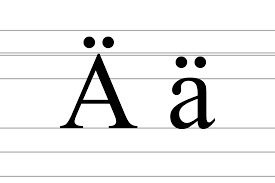
After lunch, I teach writing with my morning kids and we were finishing up work on a piece we were completing together. I’ve had the kids drafting in Google docs for the past couple of months (to help get them acclimated to the expectations of state testing,) and we were just finishing our last couple of paragraphs, focusing on adding textural evidence when one of my students brought her Chromebook to me with an issue. It seems she had somehow inadvertently turned on special characters and so when she tried to type a quotation mark followed by a capital A, Google Docs changed it to Ä. I spent a couple quick minutes trying to troubleshoot the problem, but I couldn’t find a quick or obvious solution. I sent her back to her seat telling her to just skip the quotation marks for the moment and I would see what I could figure out. Since this was a guided writing, the whole class was waiting for me and I didn’t want to hold all of them up to keep researching. We continued working on the paragraph as a class, while I moved back and forth from modeling my Google Doc to looking up umlaut solutions on my phone. All to no avail.

Before we switched classes for the afternoon, one of my girls pulled me aside to say she’s really lost on the writing we are doing. It was a huge step for her to even admit such and I found myself wanting to jump through every imaginable hoop out there to help her, but I quickly realized I wouldn’t have any more time with her today and so the immediacy of her need was met with a promise to help on Monday. A promise that felt disappointing even to me as I said it.

The afternoon was much like the morning, with more papers to grade, more feedback to provide and more questions to help students navigate. My Post-It notes had Post-It notes of their own by 2 o’clock, and the stacks of plans on my counter just kept getting shoved more and more out of the way as the pile of additional papers and resources grew.

Then, the resource room teacher called to ask me about ELA goals. She was finishing up paperwork for the IEP we had just conducted the day before and wanted to get some ideas from me on work completion goals. She apologized profusely for interrupting me and I knew she was just trying to be timely with the paperwork, but I was in the middle of teaching and had no idea how to even begin to answer her questions. I promised to get back to her by the end of the day, but even as I said as much I wasn’t sure how that would happen without any breaks in my afternoon.

Near the end of the day, the student whose IEP we were finalizing reminded me she was expecting to take a packet of paperwork home with her. She was concerned because she didn’t have it yet and the day was drawing to a close. I shared with her that it wasn’t the resource teacher who was at fault, but that she was waiting on my input and I hadn’t gotten it to her yet. I took the nudge and tried my best to focus on creating work completion goals, but I couldn’t figure out how to even begin such a task. This student doesn’t really struggle with work completion, and I wasn’t sure if the goals were for individual work or with assistance. I had more questions than answers and yet the clock was ticking for this Friday afternoon.

By the time the bell rang and I sent the kids out the door with squirts of sanitizer, I was feeling like I had failed far more than succeeded. I never did get the goals figured out and so that paperwork was going to have to wait until at least Monday. I had a list of four kids (that could easily have been doubled) that needed parent follow-ups, some of which were long overdue, and I had made zero progress on my lesson plans, so my counter and work space looked like a disaster zone. All I wanted to do was go home and sleep, but I knew I had much work to do before I could leave.

Even as I started straightening up the classroom, the sub from across the hall stopped in once more and wanted to chat. She is an “old school” teacher and was lamenting about the lack of attention that students “today” have. It was a concept I readily agree with, but which warrants a much longer conversation than I was prepared to have in the moment. I just wanted to finish my tasks and get out the door.

I wanted to call the parents on my list but my voice was all but gone, so I composed emails, triple checking to make sure the tone didn’t convey my overall tiredness, but was focused on the persistent behaviors I needed help addressing.

I sent the last of the copies I needed for the upcoming lesson plans to the printer and started gathering those materials and getting them stacked and put in my cabinets in case I need a sub for any of those days.

I saw the resource teacher and apologized profusely for not getting the information to her. She was very gracious and understanding, but even when I promised to get it to her on Monday, I really had no idea how I would be any better equipped to address the question then. I would talk with my colleague and see if she could help me formulate the necessary goals somehow.

And when finally I was able to walk out the door, when the building was all but deserted, I breathed a sigh of relief that the counter was ready with Monday’s plans, and the drawers were filled with plans for the next three weeks, and even with state testing next week, I was as ready as I could be.

It was then, as I turned off the lights that I realized I still hadn’t solved the umlaut issue. I still had a student who needed tech help I wasn’t sure how to solve and I was sure it was arise again the next time we worked in Docs as closing out and opening the document again hadn’t relieved the problem.

And I still had a beautiful child who had asked for help with her writing and I had not been able to give it to her. Not yet, I told myself. I hadn’t helped her yet. I walked back to my counter and left myself a Post-It note. “Umlaut” it says. I will solve the umlaut on Monday.

Affirmations

Trying to keep my focus and attention on school is harder and harder these days, but I try to keep myself grounded here in the classroom while I am physically here at school so that I can be completely present with my husband at home.

To that end, keeping up with the blogs and articles I usually read has been an easy way to keep myself thinking about school when my mind is quick to wander. I don’t have to interact with people, I don’t have to sit through a seminar or professional development, I can read at my leisure and put pieces of what I find into my practice as I am able.

Jennifer Gonzalez at Cult of Pedagogy is one of my go-to blogs for an easy but very informative read that nearly always delivers with some nugget of useful ideas or philosophy that changes my instructional practices.

The most recent interview she did, with Marcus Luther, was focused on an affirmation-based poetry walk with his students. While his students are much older than mine, his activity and the purpose behind it made me realize how important it is to give kids of all ages the opportunities to affirm each other.

If you have a moment, I highly recommend reading or listening to the interview with Marcus. Perhaps, like me, you will take in the power of his lesson and find that beyond writing poetry, his students learned how to spread kindness, and that kindness multiplied and lit people up on the inside in ways that is all too rare nowadays. Don’t we all wish, after all, for just a simple note telling us that someone was moved by our words? Don’t we all long for a connection with someone that came from something we said or did? And if that’s true for all of us, how much more true must it be for our students.

I’m already looking ahead in my lesson plans for ways that I can incorporate more opportunities for such sharing in my classroom. This needs to not just be a once and done activity, but a regular practice where we lift each other up and we take time to thoughtfully celebrate all the things we are getting right.