Over the past several years, I’ve had this conversation more times than I’d like to admit. I’ve scoured education blogs, devoured books, and reflected on strategies, yet I still feel adrift. Apathy among my fourth graders feels increasingly pervasive with each passing year.
We started by blaming video games. Then COVID. Now we talk about the pandemic and its aftershocks. We experimented with media-rich lessons, humor, and more engaging texts. We shortened instruction into “mini-lessons” to combat shrinking attention spans. We tried movement, flexible seating, abundant choice, and a sense of autonomy in nearly every daily task. And yet, the apathy grows stronger.
This summer, I devoted days—indeed, weeks—into preparing my classroom. I spent more on books and materials than I’ll ever be reimbursed for. I overhauled vocabulary instruction once again, redesigned daily word work tasks again, and layered in more motivational tactics than ever before. And yet, here we are in the fourth week of school, struggling to hold my students’ attention.
Today, I reached a breaking point and decided to quit in small, practical ways. I handed out a worksheet and asked for independent work. I followed with a graphic organizer that we had never used before, instructing them to fill it with information from this week’s reading after completing the worksheet.
The response was telling: blank stares, anxious glances from high achievers, and several students asking for help that I declined in hopes they would persevere. Minutes stretched, and many students wrote nothing.
When I finally asked what was happening, the truth came out: “We don’t know how to do this.” I could hear the stress in their voices. We had a long, honest conversation about what it feels like when I don’t “show them how to learn.” I reminded them that my job is to help and to make learning as engaging as possible, but that learning isn’t always fun or exciting—and that some tasks are simply necessary. A student’s remark, “Like when you have to go to meetings!” reminded us that adults also face less-than-glamorous responsibilities.
We talked about the emotional relief I felt when a lesson lands and the frustration that comes when it does not. We acknowledged the power—and the limits—of my role. We agreed that I will continue to strive to make ELA engaging where possible, while also addressing the dull but essential routines that underpin growth. In return, they agreed to participate, to try, and to persist—even when the work isn’t exciting.
I don’t know if I reached every student, but I hope that at least one or two walked away with a renewed sense of purpose. It’s a start, and I’ll take it.
I recognize I can’t control what happens at home, but I wish there were more opportunities for children to practice responsibility and to endure some of the mundane tasks that life presents. I don’t want to paint learning as dull, but I do want to acknowledge that not everything is fun. Compare this to video games, which offer instant gratification; real learning often requires patience and effort.
I wish families could eat dinner together around a table, without devices at the center of every interaction. I wish children could observe and participate in chores, and I wish adults could model the kind of sustained attention that daily life demands. I wish parents included their children in errands, to illustrate that some tasks—like grocery shopping—are tedious but essential.
Life’s not always engaging, and neither is learning. Yet if we want to cultivate productive, resilient citizens, we must teach students how to persevere through the hard things so they can truly appreciate the moments of joy and discovery that follow.
I’m still learning this balance myself. I’ll keep pushing, keep reflecting, and keep sharing what happens in my classroom—honest, messy, hopeful.
His name has already been mentioned with more than just a sigh and a shake of a head just three days into the school year by some of his former teachers and staff who have worked with him in an almost apologetic way that he is on my roster. Without asking for further clarification, without looking into his file, without speaking with the behavioralist about a plan or to put together a strategy, I dove into my relationship with this student blind.
Today we took a benchmark test, one we always do a few times throughout the year to monitor progress. While the students have taken the test in previous grades, the first time in the fall is understandably marked with a lot of indifference on the part of the student and a lot of cajoling on mine.
He struggled mightily to put in any amount of energy into focusing on this test. He wasn’t angry, he wasn’t causing any disruption, he just could not have cared any less about this assessment or his efforts to show me what he has already learned.
So, I nudged. While the students were on their Chromebooks answering 34 questions about language arts, I was futzing with a book display and restocking papers and doing other assorted nonimportant classrooms tasks that allowed me to circulate the room without looking like I was hovering. And every time I passed by this student, I would simply touch his shoulder, or say, “Keep at it!” and notice that he was no futher than he had been the last time I had circled past his seat.
As others started to finish and he was still sitting, sometimes lightly typing on the keys without actually pressing them, I picked up a shelf that I was trying to peel the plastic protectant off of and sat down next to him. He looked at me and I stayed absorbed in my task. I noticed that he did a few more questions and then slunk down in his seat feeling defeated. I peeked over at his screen and said, “Look at you go! You’re almost halfway!” He looked at me and then looked around the room, noticing many others who were closing their Chromebooks, finished with the task. To the class at large I said, “Boy do I love those students who are taking their time and giving their best efforts on this!” While I knew that wasn’t what was really causing his snail’s pace, I noticed him sitting up a little straighter and focusing on the next question.
I got up and wandered once again, finished with the shelf for the moment. The next time I pass him by he had only nine questions to go and I leaned in and commented on his progress. “You’re getting there! Only nine more questions!”
It took twenty minutes for those nine questions and he was by far the last to finish the assessment, but when he finally closed his Chromebook, I walked past his seat, quietly placing a small notecard next to him that read, “I know this assessment isn’t any fun at all, but I really love the way you stuck with it and kept going!”
I have very little faith that his results will accurately demonstrate his full capabilities, but for now, completing the task feels like the hard task worth celebrating. I simply hope the note helps the motivation next time.
A short while later, the student raised his hand while the class was quietly working and I walked over to him to see what he needed. “Can I put this in my backpack?” he quietly asked me, holding my note. “I don’t want to lose it.”
“Absolutely!” I responded. “You earned that today!”
We sometimes lose sight of the small moments with students when their files indicate that they are full of very big feelings and very large moments in the classroom environment. As I work to build a relationship with this particular student, I hope he knows that I fully support him right where he is and I hope to help him gain the confidence this year to fully engage in his own learning journey.
Sometimes, actually, most times, it isn’t about the test scores in Room 16. It’s about the heart scores. I’m hoping this one was a tally in the win category.
Today was my last official day of summer break. Tomorrow starts three days of professional development and next week the students arrive, ready to take on a new year.
To that end, I put absolutely nothing on my to-do list for today. Of course I fed the birds and worked on the crossword. And I did replenish the chickens’ water, but I didn’t do laundry, I didn’t weed any flower beds, I didn’t change the mower blades. I just, quite simply, didn’t do anything important.
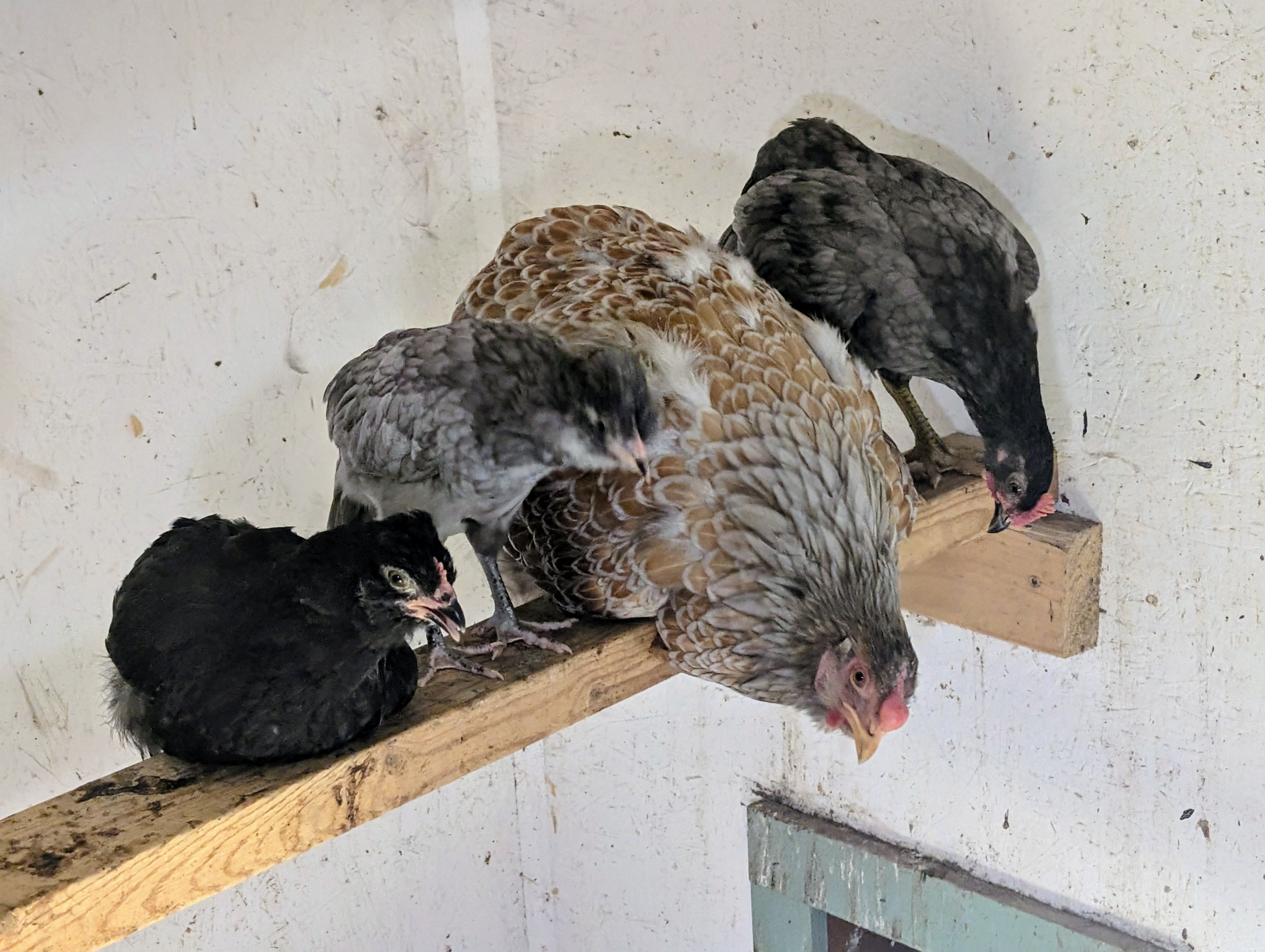
And as part of doing nothing, I sat outside for quite a while this afternoon with my flock of hens and watched them as they enjoyed being out of their run. I got the usual treatment from Izabelle – she always has a lot to say to me. Della came to say hello but it was very clear she was done with her role of “Mama Hen” as she had no contact whatsoever with the three somewhat little ones she hatched just a couple months ago. Instead, Gabby seemed to fill in as guardian, keeping close to the littles and being the one they ran to when they got scared.
Eventually, a few went back into the run (without my beloved Iris, getting them back inside was quite a chore today), and it was then that I got quite a shock. The little ones went inside and settled in for a little nap and lo and behold, Millie got right up next to them in a very motherly way. I was shocked. Millie? Queen Millie? Millie, my hen from my first set who made it well known that she was the top of the pecking order? Millie? The one who used to mercilessly pick on Ruby? Millie? The very same Millie who would go out of her way to peck another hen on the head just because? I shook my head in complete disbelief.
Later, when I went out to make sure they had all made their way back into the coop so I could shut them in for the night, I caught Millie on the roosting bar with Agnes, new little hen Agnes, under Millie’s wing and Margot and Edith Ann on her other side. “You’re getting soft in your old age,” I told her as I shut the door behind me to let them rest for the night.
On Tuesday night I will meet most of my incoming fourth graders. Open House is my favorite day (night) of the year and gets me really excited for our upcoming months together. Last week, I received an email with information about the incoming students – just general notes about who needs extra time, who is a bit squirmy, who starts off really shy but opens up later – those kinds of notes, but I didn’t read it. While there are some things I think are important to know about a child right upfront (allergies, for example, or a health condition) I like to start the year with a fresh slate for the student and an open, untainted mind from their teacher. Maybe this year, Juan won’t start off so shy, or maybe Sophie won’t need a fidget but Sam will. My family has often told of the “miraculous positive transformation” that I underwent between middle and high school, who’s to say what these kids will be like once they enter the doors of Room 16?
In the same podcast that I wrote about last week, Dr. Ablon quoted his grandfather as saying, “If you give a dog a name, he will eventually respond to it.” Millie most definitely isn’t the bully hen anymore, and I’m glad she taught me that today. It’s a great reminder to give my new students the chance to show me who they are right now, this year, and not as they were as third graders.
I never would have dreamt that Millie would turn out to be “Queen Mom.” I can’t wait to see who my new students are this year!
Fifteen days until school starts. It’s 1:30am, and I am wide awake feverishly writing notes in bed while I listen to a podcast I stumbled upon. The title of this blog never ceases to prove true, as by the time I’m done listening, I’m thinking of all the ways – HUGE ways – this impacts me. Personally, sure, but professionally – wow, yeah.
Mel Robbins isn’t new to me. I’ve read her book and listened to her on various interviews and I’ve listened to her podcast, but somehow, down a rabbit hole, I found an interview she did six months ago with Harvard professor, Dr. Stuart Ablon. The interview is called, “6 Words That Will Change Your Family” and what Dr. Ablon says felt as though he catered his words directly to me. How many times in the last few years have I lamented that students are just “unmotivated,” “apathetic,” “uninspired.” How many times did I bang my head on my table and wonder – again, how was I supposed to be any more engaging? How was I supposed to reach kids that felt unreachable? How was I going to help kids learn the things they needed to learn when they couldn’t even pay attention to me?
And then there it was, Dr. Ablon speaking directly to these questions, directly to my misconception that kids aren’t motivated.
I could go on and explain what he had to say, but frankly, he is far more articulate on this subject and his passion just pours through his research and his excitement to share this with anyone and everyone in the hopes of changing how we deal with others, especially children.
The podcast is an hour and a half long and while I encourage you to seek it out in any format, watching the interview on YouTube felt especially powerful.
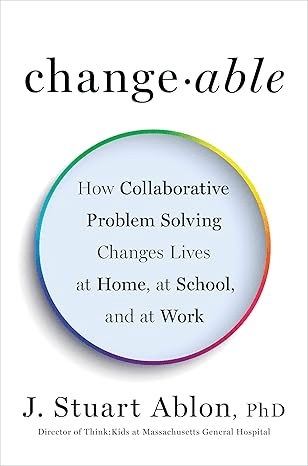
Dr. Ablon also has a book that speaks to these findings and strategies called, “Changeable.” My copy is already on order at my local bookstore.
I am 37 days into my summer break. I am drastically under-achieving on personal projects around the house for that amount of time, but considering I am off work, I am greatly over-achieving on professional projects for school. When I’m not redesigning my lesson plan book for the fifth time, or researching a new curriculum that has been proposed, or putting together a “little something” gift box for the new teacher I am mentoring – or – when I am avoiding weeding the flower beds that just need weeding again (and again), or when I have mowed all of the pasture except where the lovely woodchuck and his lovely family have built a lovely abode with many, many, lovely (read that “big” and “deep”) entrances hidden in the tall grass that are just the right size for my mower wheel to get very, very stuck in – when I am not doing any of those things, I have been watching the TV show, “The Bear” on Hulu.
The show came highly recommended to me a couple of years ago and yet I was slow getting into it. The first couple episodes didn’t grab me and it wasn’t until someone else said it was worth sticking it out that I started over, got hooked, and never looked back. When it was announced that Season 4 was going to be released soon, I started back at the beginning and rewatched the first three seasons to be ready for the new one. Believe me, watching all those episodes again was truly a labor of love.
So today, after shopping online for tall yard markers that I could put in all the woodchuck’s lovely holes to maybe prevent a necessary tractor pull to get the mower unstuck during future mowings, and after reading more of a new book on fluency, I sat down to indulge in an episode or two of the new season.
If you haven’t watched the show, I can’t recommend it enough, especially if you have any spot in your heart for the city of Chicago or the restaurant business. But tonight I was struck by it in a way that I think everyone could relate to. In the proverbial nutshell, the show is about a man with a passion for creating meaningful experiences with food that drives him to re-envision a long-standing family business into a very high-end dining experience.
More than that, clearly, it is about the way the transformation of the restaurant is also a transformation of the people that work there. Which is exactly why it is a show that I am more than just mildly obsessed with. Character development and the complexities of the human condition are always of interest to me. It is, in no small measure, the reason I love books so much. (Oh! Imagine if “The Bear” was a book series!! But I digress…)
I didn’t like one particular character at all initially. We weren’t meant to, as the audience, but Richie has turned out to be a character that I now feel deeply moved by, as I experience each new episode. In the first season, he is understandably divorced, with a quick temper and an immature social view. He is stuck in the routine of a life he doesn’t like, but is so adverse to change that it hampers his own happiness. If you’ll forgive me for saying so on my “professional” blog, he’s an ass. He is arrogant but ignorant; he is crass and verbally abusive; he is shallow, and, perhaps most importantly, he is lost and doesn’t even know it.
I won’t give away the show if you haven’t seen it (definitely watch it!) but Richie undergoes one of the best written and best acted character arcs I have watched. And it was during the episode tonight that I took pause and viewed his transformation from a professional standpoint instead of exclusively a personal one.
Tonight, on the episode I watched, (Season 4, episode 2) Richie, the front-of-house manager, enthusiastically approaches one of the head chefs with a short motivational quote he has written for his staff. It is demonstrably apparent that he has labored over these words, and his energy suggests that he is proud and wants to share that. She responds, however, with a quizzical look and starts her response with “I wonder if…” and without fanfare suggests that perhaps his sentiment is too “lofty” for the intended audience. She goes on to suggest that he just simplify what he is trying to say. She doesn’t at all follow the teacher “criticism-sandwich-approach” of complimenting, whereby we provide a compliment, then a small, carefully worded suggestion before slathering more compliments on top. The chef just dives in, makes an unapologetic suggestion, and stands firm on it.
And here’s the part that got me: Richie immediately reacts in agreement, mentally kicking himself for the error. He doesn’t defend his word choice, he doesn’t nod politely and then leave without intention of changing it. He doesn’t go and complain to someone else about how she always cuts him down, or how she thinks she is better than everyone. He looked her in the eyes, listened to her response with his whole self, and owned it. He nods, in obvious appreciation and gratitude and then he says the two words I have come to love most on this show, “Heard, Chef.”
I paused the show. I sat there on the couch and stared at the frozen screen. Richie, the asshole from just a couple seasons ago, is in a suit and he has spent time perfecting words to motivate the people that work for him, in positive, uplifting ways. He took feedback (that wasn’t even overtly requested) in a rational, open-minded, gracious way. And in those amazing two words, “Heard, Chef,” he demonstrated that gratitude and respect back to his colleague. There is a high level of trust that they both want the best, and that is the only thing that matters. This level of trust not only fosters cooperation, it has created a community of people on the show, that all bring their unique talents together to achieve one common goal.
My question, my pause, is how do we foster this kind of mutual trust, support, cooperation, and gratitude for each other in the teaching profession? Or, to be brutally honest, my question is, what am I doing that is preventing or prohibiting this kind of teamwork with my colleagues?
I know administrators have tried and tried to almost push teamwork upon us, which even as I type and you read those words, we all know cooperation and collaboration won’t happen unless it is organic, but I appreciate their mindset. I can even reluctantly admit that I am fortunate to work for a district that has created weekly collaboration time. And yet… I don’t feel it. I don’t feel that cooperation is achieved during these times. I actually dread our weekly meetings. They are something to be endured, in my mind, not enjoyed, and I have never gone into one thinking I would emerge with meaningful suggestions that helped me grow professionally. That is just to say that if a colleague told me a lesson I had worked on was too “lofty” and that I should “simplify,” I wouldn’t react like Richie did. Not universally. There are only a couple colleagues that I would graciously hear meaningful suggestions from, especially unsolicited ones.
The transformation of “The Bear,” (the physical restaurant itself, and the personal changes in the staff) did not happen quickly, and it did not happen seamlessly. It was a mountainous struggle, with far more valleys than peaks. Each character had their own personal journey and battles to get to this high level of trust. The timelines were all different, the process was unique to each character, and the methods were as distinctive.
Administration can provide the time and the shared goal, but, first, we need to address our personal needs and obstacles and align our mindset with the common goal. Only then can we collaborate effectively to create something amazing.
To that end, I am declaring this year, “The Year of The Bear.” At least for me. My goal, my overarching professional goal, is to cooperatively identify a common ELA goal with my colleagues and then, to personally, wholeheartedly, buy in to that one goal so much that I cannot help but say, “Heard, Chef,” whenever someone helps me take steps forward toward that goal. The goal for us as teachers, it seems to me, is to create positive learning environments that not only foster a lifelong love of learning for every student in our care, but also helps these small humans grow into gracious, respectful and responsible citizens of this world.
I had every intention today of following the lesson plans I put together two weeks ago. I had the vocabulary activity copied, the reading passage (with noted discussion points) we were going to continue to work on as a whole class, small group activities already in folders, and the next poem we were going to work on in writing ready to go. All of my teaching materials were organized in my green go-to folder, my small group clipboard was ready for the day’s focus, and our current read aloud was bookmarked and ready to go by my reading chair.
But that’s not how teaching goes, is it? It’s now 4:30 and the stack on my desk still has the new poem type we never got to. The read aloud book still sits in the same spot, untouched today, and there’s a globe on my front table that wasn’t there when the day started.
Our reading passage this week is aligned with what my co-teacher is focused on in social studies. We are looking more closely at what the main products and industries are in Michigan. I have read so much research this year about how important background knowledge is to reading growth, that I have tried to augment, supplement and continue the topics that my partner teaches to help solidify not only the reading strategies but to build up their knowledge base while we do it.
But as we dove into the reading passage today, we stopped to really dissect a particular sentence that said, “…the moderating effect of the Great Lakes creates perfect conditions for growing [blueberries].” We pulled up a map of the United States so we could visually support what we were reading. We talked extensively about the word “moderating” until we had a good understanding of it, particularly how it could relate to one of the Great Lakes.
And then, the conversation just kept evolving. I shared how I had never seen fields of blueberry bushes or grapevines until I moved to Michigan. They asked where I had lived before and I showed (on the map) about where in northern Illinois I grew up. This led to quite a conversation about how the proximity (another word we had a great discussion about, with several “Ah ha!” moments as they related it to “approximation” in Math!) of my Illinois location was about the same with regard to Lake Michigan as where we live now. “How could it be so different?” they wondered. And a conversation about the jet stream ensued.
Which somehow led to a discussion about time zones (a topic very few knew anything about). Which led to a discussion about seasons and to my shock that these ten-year-olds didn’t know the earth was on a tilt. Hence, the globe (that I ran to fetch from the copy room, momentarily abandoning my class for a prop that I hoped would help them better understand how seasons are created.)
Which is all to say that the discussion points that I had already noted for today in my plans were abandoned. The small group work was cut short, and we never did finish reading the rest of the whole group passage. I handwrite my plans, and this means a mess in my playbook for sure, but I cannot say I mind one bit.
THIS is building background knowledge. My objective for today was still met. It is impossible to know the exact gaps that students have in their experience, or to know what they have learned but forgotten. As these moments arise, (when I can afford to let a tangent take over the lesson), I want to seize them. I want to help students in the moment to connect new concepts to prior learning and if that prior learning isn’t there, then I want to help them build a scaffold from what they knew to where we are, including learning what knowledge they need to know along that route.
So, at the end of ELA today, the vocabulary page was completed, but no cinquain poems had been written in our notebooks; the small group work had been minimized; a map of the United States remained on the board with lines denoting time zones, jet streams, and lake effect notations; and a dusty globe sat on my table. But, with any luck, some gaps were filled. And when we get back to that same reading passage tomorrow, their understanding of how Lake Michigan helps our area of the state produce such amazing blueberries, grapes, apples and asparagus will be deeper and more complete.
That’s what it was all about to begin with anyway, wasn’t it?
It’s been years since I read Donalyn Miller’s book, Reading in the Wild, and if asked, I’d probably even be a little rusty on what exactly her premise was, but lately, if I had to describe my classroom, that’s the phrase I would use. And it makes me absolutely giddy.
I know, from years of experience, that many students are experts in looking like they are reading, without actually doing so. I have spent countless hours trying to find ways to really engage my reluctant readers with books over the years and while I have had glimpses of it before, I have never felt so fully immersed in great reading as I do this year.
By the third week of school, I had assessed my readers in fluency and comprehension and had made initial groupings. I committed to novel studies with all but my most struggling readers and I only held off on putting them into a novel so I could spend the first few weeks building their reading confidence with shorter, more manageable texts. Today, in the sixth week of reading groups, I had to take a second and soak it all up.
My class rotates through a variety of stations based on their individual needs. Spelling is individualized, so kids spend one of their four stations working on their current spelling pattern. Every student has one station every day to read a book of their choosing. While reading, they are on the hunt for what we call VCWs, or “Very Cool Words.” They make a note of them as they find them and look them up and record them in their personal dictionaries later on, with plans to use the words in their writing when applicable. They are also currently paying attention to the theme in the books they read and are making note of any idioms they come across. Every student also meets with me for a smaller, leveled reading group where we address the standards we are focused on within regular chapter books. For their fourth station, students work on four vocabulary words each week, these words provided by me. They use the words appropriately in a sentence, illustrate each word and all the while practice penmanship, spelling, writing conventions and their imagination. (But don’t tell them, they just think they are drawing pictures and writing fun sentences!)
Today, while I sat at one table in my room with five of my students, reading a novel about wolves, I glanced around and saw two kids who had already passed a particular spelling pattern helping others who were currently learning it. I saw a small group of girls sharing their vocabulary sentences, darting glances my way as if I were going to scold them. Little do they know that looking at more sentences with the words only increases their understanding and there was no way I was going to put an end to that! I saw students who had earned the right through demonstrated effort and responsibility, sitting in comfy spots around the room, completely absorbed in books. Two boys on the sofa kept sharing something about their books with each other, another practice that I’m never going to put a stop to.
I saw some of my advanced readers collaborating on their higher-level vocabulary work. And, I saw a struggling reader writing a new word on her index card, a vocabulary word at her level, related directly to her own reading.
The group in front of me was completely absorbed in our wolf book. I don’t have to remind a single one of them to read together with us. We all read chorally and the kids love the texts so much they are on task without reminders. As we stopped to discuss a particular aspect of the story and how it relates to the larger theme, some students from other tables, chimed in to the discussion, despite not being in that particular group. We had to remind them that it was currently our discussion, but I winked at them to let them know that it wasn’t a punishable crime. Their listening comprehension was growing whether they realized it or not. My group also quietly whispered to one another when they stumbled across a VCW as index cards were whipped out and the word was quickly recorded, one boy said to me, “Don’t let them steal our word!” trying to covet the cool word he found. He wants to share it on Fridays during “Shout Outs” and I promised him the word was his to share.
My reading stations aren’t perfect, they are, afterall, student-driven, so there are lost papers and some wasted minutes and the occasional off-task behavior, but overall, my kids love this time. And frankly, so do I. Everywhere I look, I see kids engaging in text, excited over finding unknown words, sharing, laughing and discussing texts. It is, to me, what reading should look like no matter what age we are. But it is a delight to my soul to see it happen with ten year olds.
She has a beautifully unique name, but for reasons I couldn’t begin to explain, I called her “Petunia.” She moved in halfway through my first year of teaching with scars on her heart that I would sometimes see evidence of even if I never knew the cause. But more than any of my other third graders, she shared my sense of humor and we enjoyed playful banter during our time learning together. Her name was mentioned many times over dinner along with the other students who brought joy to my days and who made that year so special to me. At the end of the year, she wrote me a little card, in the way that third graders do sometimes, and she signed it, “Betunia,” having misunderstood my nickname for her this whole time.
She kept in touch in the years since, this beautiful flower of a child. With her easy smile and gentle heart she would stop by my classroom to say hello, share a hug and catch me up on what she was doing. Sometimes months would go by between visits, sometimes years, but I only needed to say, “Guess who stopped by today?” and my husband would know from the smile on my face that I had seen “Petunia” again.
Yesterday, she sent me another email, catching me up briefly on her life. A college senior now, majoring in a well-suited field of psychology, I have no doubt the positive impact she will have on people however she chooses to apply that degree. In her update, she shared that she had proudly bought her first car, including a picture of her beside it, and telling me that she named the car, “Betunia.”
I sobbed the entire drive home, not just for the wish that I could share that with my husband who would understand instantly what an impact this had on me, but because I’ve been searching for my “why,” searching for my purpose, searching for my reason to stay in teaching or my reason to make a change, and she just handed it to me. Again.
Maya Angelou is credited with very wisely saying, “People may forget what you say. They may forget what you do. But they will never forget how you made them feel.” As teachers, we hear this quote so often it has perhaps lost its impact. Until we turn it around and realize, it’s also how the students make us feel, too.
I don’t have to search for my “why.” I don’t have to wonder what my purpose is. Petunia is why. And every student like her. Because when we pour ourselves, exhaustively, extensively, painfully, tiringly into our students, we will, sometimes, get to see the difference all that effort made on one child’s life. And that is what keeps me teaching.
My principal uses the phrase often with our later elementary students. “Your best effort takes time!” he reminds them again and again. I heard these words in my head during the hours I spent in my classroom this weekend. I let them roll over me and soak into my work acknowledging what I already believe to be true: in order to be the best teacher I can be, it takes time outside of the school day. This has always been true for me. I have always been at school long befor the students and I have spent time on many, many weekends in my classroom prepping materials and planning lessons. I rarely, if ever bring work home with me, but I do spend many hours beyond the 8-4 working on plans. In fact, the annual festival going on in my town this weekend was always one that I all but missed. So early in the school year, I have always spent much of my afterhours time in my classroom and so I rarely participated in the activities of the festival.
I know it’s not a choice every teacher can or wants to make. I know many have children and families to balance their time with but for me putting in this time is just part of the profession I chose. In order for me to be the best teacher I can be, I have to put in more time than the school day provides. It’s what I expected to do when I got my degree. It’s a truth about education that I saw my dad model during his years as a teacher and administrator. My best effort means I am doing everything I can to put best practices into my lessons as often as possible. It means using the right materials and the right groupings to maximize learning and growth and I have never found a way to make all that happen within the contractual hours of the day. I want my time in this profession to be more than just a way to pay my bills, I want to feel fulfilled following this calling, and to feel that sense of accomplishment, I have to invest more of myself and my time than one planning period a day.
So I spent much of this weekend, much of August and even parts of July putting together differentiated spelling and decoding lessons. I’ve known for years that my spelling fell short of what the research shows are best practices, but I was focused on creating better reading groups and so spelling and decoding had to wait until I could put all the pieces together and work the logistics out. The strides I made in the last two years differentiating reading made me even more eager to get the pieces in place for spelling and decoding work. This year I have more students and less in-room help, but I didn’t want that to be an excuse, just a challenge to work through.
When I left school this afternoon, passing through town where the festival was all but winding down, I didn’t feel like I missed out, instead I felt elated. I felt triumphant. I feel downright giddy that starting in just the third week of school this year, I have enough data to make meaningful learning groups and I have the resources created and in place to differentiate for all students in meaningful ways. I feel like my best effort is in place, even if it took time to get there.
And for the first time in a very long time, I’m excited to go to school tomorrow and see how it all falls into place. I know that I will still need to tweak and modify but I also know that no student is doing work beneath their ability or simply to keep them busy while I work with others. I know that the precious time I have with these students will be well spent for all of us. My best effort took a lot of time but my sense of accomplishment and pride is well worth it.
Years ago, shortly after getting married and moving into our new home together and even more significantly, after I finally completed two grueling years of an accelerated graduate program while teaching full-time and raising a teenager, my husband looked at me and quite astutely remarked, “You’re back.” I was standing in the kitchen baking bread and making soup on a Sunday afternoon and his two-word declaration hit me hard in the weight of its truth. I was. I was, very much “back.” I was back to the me that enjoyed leisurely baking. The me that had time to spare on a Sunday afternoon. The me who wasn’t stressed about getting four writing assignments and six readings done all while trying to write meaningful lesson plans on little to no energy. Graduate school had sucked the ever-living life out of me. Through complications with a mentor, the process had taken twice as long and cost twice as much, leaving me more than twice as frustrated and exhausted. But with it all behind me, I had resumed my passions and existed more fully in the present than I had in a long while. I was back.
Three years ago I taught only math, with desks six feet apart and kids isolated in small groups wearing masks all day. Two years ago cancer entered my household preoccupying my time and mental capacity and last year I lost my beloved to the disease, leaving my traumatized heart and brain to barely function while operating in survival mode. But now, just this week, standing there talking and laughing with my students I felt present in ways that have eluded me since before the pandemic.
The first week of school is admittedly not my favorite. I love the way a classroom runs when the students all know and embrace the routines. I love the learning that happens when we are all familiar with each other and open with our vulnerabilities. I enjoy growing with students and sharing our days together in ways that create a fun but meaningful learning environment. The first week is far from all of those things. It’s full of nervous energy and schedules that get way off track. It’s a complicated mix of excitement and anxiety, as students try to navigate new relationships and a new classroom vibe and as we all try to remember how to function as a group of people in a classroom together.
But it was there, during that chaotic, anxious first week, in a moment when we had spent way too long (way too long!) putting supplies where they belong and I had repeated myself and referred to the directions on the board more times than seemed reasonable, when a student was still not doing what he should have been that I first realized just how different I am this year. The feeling was so overwhelming it stopped me right where I was and demanded I notice the change. I was calm. I was patient. I was funny, in fact. While I was frustrated with all we wouldn’t get done in my lesson plan for the day, I stayed fluid and rolled with it and the shift didn’t make me tense or edgy. I was different. Or, more accurately, I felt like I was the me before the pandemic. Before cancer. Before I lost my husband. Back when building relationships with my students and teaching was all I had on my mind while I was in my classroom. Back when my personal life was steady and consistent. Back when I had the energy and mental capacity to deal with ten-year olds with the patience and compassion they require.
Teaching requires more out of you than can be well articulated. There are many things about last year and the year before that, that I cannot even recall. I might have physically existed in my classroom and with my students but I was not capable of anything more than merely existing. My co-teacher picked up more slack than I even know, and my students unknowingly got less than they deserved from their teacher.
But now, I am back. I feel fully present. I have come through trauma on many levels and I am returning to what was in me all along. Even more, I am standing in my classroom now with a whole new appreciation for what it means to suffer grief and trauma. I am reminded that my students are going through much the same. Their baggage, big or small, may prevent them from being fully present every day. Their patience may be short, their ability to focus and be funny and learn may be absent due to reasons I may or may not be privy to. But I can stand here now, bringing my own experiences to my classroom, allowing my tragedies and traumas to make me a better educator, a better human being.
So here’s to a year with students where I am as fully present as ever. Here’s to being back.





 Teaching at 3am